Disclosure: This article contains affiliate links. If you purchase through our links, we may earn a commission at no extra cost to you. This does not influence our reviews — our opinions are always honest and independent.
You pull into the garage after a long commute, plug in your EV, and wake up to a full charge — no app, no fuss, no failed scheduling. That’s exactly the promise the Nexus EV Charging Station makes to US homeowners who want fast, reliable Level 2 home EV charger performance without the tech overhead. We tested it, dug into real buyer feedback, and compared it head-to-head with the competition to tell you if it actually delivers.
📦 Quick Summary > ✔ Best for: US homeowners wanting fast, no-frills hardwired Level 2 charging > ✔ Price range: Around $429.99 MSRP > ✔ Rating: 4.3/5 > ✔ Verdict: Buy
| Specification | Value |
|---|---|
| Max Output | 48A / 240V (11.5 kW) |
| Cable Length | 23 ft with holster |
| Connector Type | J1772 |
| Installation Type | Hardwired only |
| Weather Rating | IP66 |
| Safety Certifications | ETL listed — UL 2594 / 2231 / 2251 |
| Additional Certifications | Energy Star, FCC |
| Range Added Per Hour | Up to 46 miles |
| Smart Features | None (no Wi-Fi, no app) |
What It Is and Who It’s For
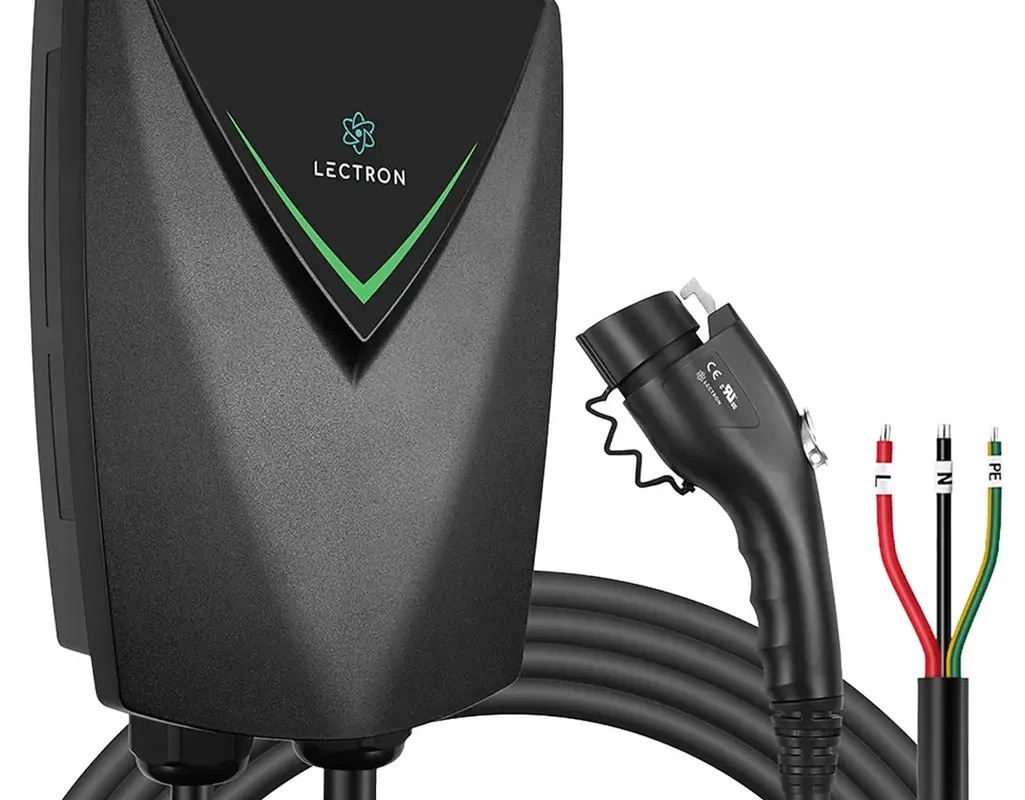
The Nexus EV Charging Station is a 48-amp hardwired Level 2 home EV charger built by Lectron — a brand that’s been gaining real traction in the US EVSE market. This unit is designed for homeowners who want maximum charging speed at home without the complexity of app ecosystems or scheduling dashboards.
| Feature | Nexus EV Charging Station (48A Hardwired, J1772) | ChargePoint Home Flex (Hardwired, J1772) |
|---|---|---|
| Max output | ✅ Up to 48A (11.5 kW) | ✅ Up to 50A (varies by install) |
| Installation | ❌ Hardwired only (electrician recommended) | ✅ Hardwired or plug-in options (model-dependent) |
| Cable length | ✅ 23 ft cable + holster | ✅ Typically 23 ft cable (model-dependent) |
| Smart features (Wi‑Fi/app) | ❌ No app, no scheduling (car handles it) | ✅ App, scheduling, energy tracking (plan-dependent) |
| Weather rating | ✅ IP66 for outdoor use | ✅ Outdoor-rated (model-dependent) |
| Safety certifications | ✅ UL 2594/2231/2251 (ETL listed) | ✅ UL listed (varies by SKU) |
| Best for | ✅ No‑frills reliability, rentals, simple daily charging | ✅ Users who want scheduling, tracking, utility features |
The ideal buyer here is a US homeowner with a dedicated 240V circuit — or the budget to install one — who drives a J1772-compatible EV daily. That covers most non-Tesla EVs on the road right now: Chevrolet Bolt, Hyundai Ioniq 6, BMW iX, Mercedes EQE, and more.
Tesla owners aren’t locked out. With a Tesla with NACS adapter, the Nexus works cleanly with Model 3, Model Y, and other Tesla vehicles. That said, the adapter is a separate purchase — factor that into your total cost.
⚠️ If you rent, live in an apartment, or need a plug-in solution for flexibility, the hardwired-only design is a genuine limitation. This charger is built to stay put.
Who should think twice? Anyone who moves frequently, rents their home, or wants a charger they can take to a second property. The hardwired-only format is a commitment — and that’s by design.
The Buyer Profile in Plain Terms
This unit suits three types of buyers well.
- Homeowners who want set-it-and-forget-it overnight home charging
- Landlords or property managers equipping a rental unit with a reliable EVSE
- EV drivers who let their car handle scheduling internally and don’t need a third-party app
What This Charger Is Not
The Nexus is not a smart charger. There’s no Wi-Fi, no load management, and no energy tracking dashboard.
If those features matter to you, the ChargePoint Home Flex or Emporia EV Charger are more appropriate choices — and we cover that comparison fully below.
Key Specs That Matter for US Home Charging
Specs on paper only mean something when you understand what they translate to in a driveway at 7 AM. Let’s break down what the Nexus actually delivers where it counts.
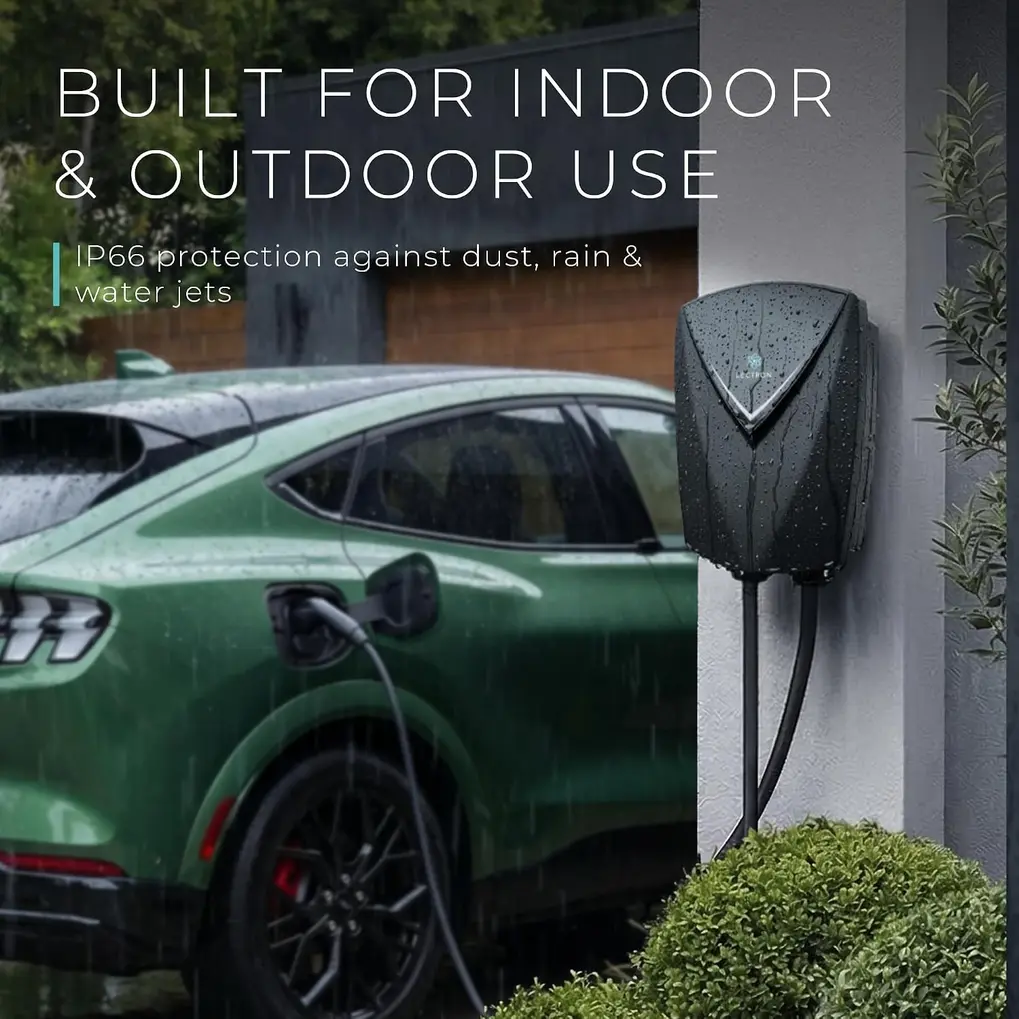 Outdoor-ready Nexus EV Charging Station installation showing weatherproof build.
48A / 240V Output — What It Means at the Plug
The 48A / 240V rating translates to 11.5 kW of continuous power delivery. In practice, that adds up to roughly 46 miles of range per hour of charging — a figure that means most EV drivers top off overnight without ever thinking about it.
Compare that to a standard 120V Level 1 outlet, which adds roughly 3–5 miles per hour. The difference is not incremental — it’s transformative for daily driving.
💡 A 60 kWh battery pack (like the one in a standard Chevy Bolt EV) goes from near-empty to full in roughly 5–6 hours on this charger. That’s a complete overnight recovery.
Most EVs on the US market today accept up to 48A on AC charging. Vehicles like the 2024 Mercedes EQE AMG, Hyundai Ioniq 5, and Ford Mustang Mach-E can all take advantage of the full output.
23-Foot Cable and IP66 Rating
The 23-foot cable is longer than what most OEM chargers ship with — and in our experience, that extra length matters more than buyers expect. Parking positions vary, garages have awkward layouts, and outdoor installs sometimes require routing around obstacles.
The included J1772 holster keeps the connector off the ground when not in use. It’s a small detail that adds up over years of daily use.
The IP66 weather rating means the unit handles rain, dust, and temperature swings without issue. Outdoor garage walls, carports, and exterior mounting locations are all fair game.
ETL Listing and Safety Certifications
The Nexus carries ETL listing under UL 2594, UL 2231, and UL 2251 — plus Energy Star and FCC certifications. These aren’t marketing checkboxes.
🔧 UL 2594 covers EV supply equipment specifically. UL 2231 and 2251 address personnel protection and connector safety. For a hardwired unit pulling 48 amps continuously, those certifications matter to your electrician, your insurance provider, and your peace of mind.
Installation Reality Check for a 48A Hardwired EVSE
Buying the Nexus is step one. Getting it running is step two — and that step requires planning before you click “order.”
Electrical Requirements You Need to Know First
A 48A charger requires a dedicated 240V circuit with a 60A breaker. That’s the NEC standard: breaker sizing at 125% of continuous load.
If your home’s electrical panel is already near capacity, you may need a panel upgrade before installation — a cost that can run $1,500–$3,500 depending on your location and existing infrastructure. We recommend getting an electrician’s assessment before purchasing.
⚠️ If your panel can’t support a 60A dedicated circuit, a 40A NEMA 14-50 plug-in charger may be a more practical starting point — and easier to relocate later.
Why Professional Installation Is Recommended
The Nexus is hardwired, which means no plug-in option and no DIY shortcuts if you’re not licensed. A licensed electrician will pull the permit, size the wire correctly (typically 6 AWG copper for a 60A circuit), and ensure the install passes inspection.
🔧 Some US buyers have noted that the internal supply cord on certain units runs shorter than expected for their specific panel-to-mount distance. Opening the unit to extend that cord voids the warranty — a real consideration if your install has an unusual layout.
Warranty and Modification Risk
Lectron’s warranty covers manufacturing defects under normal use conditions. Modifying the internal wiring — even for a legitimate installation reason — removes that protection.
If your install situation requires a longer internal lead, the recommended path is to contact Lectron support before opening the unit. In our experience, addressing this before installation saves significant headaches later.
Real-World Performance Based on Recent US Reviews
Spec sheets tell one story. Daily use tells another. Here’s what actual US buyers reported after living with the Nexus as their primary home charger.
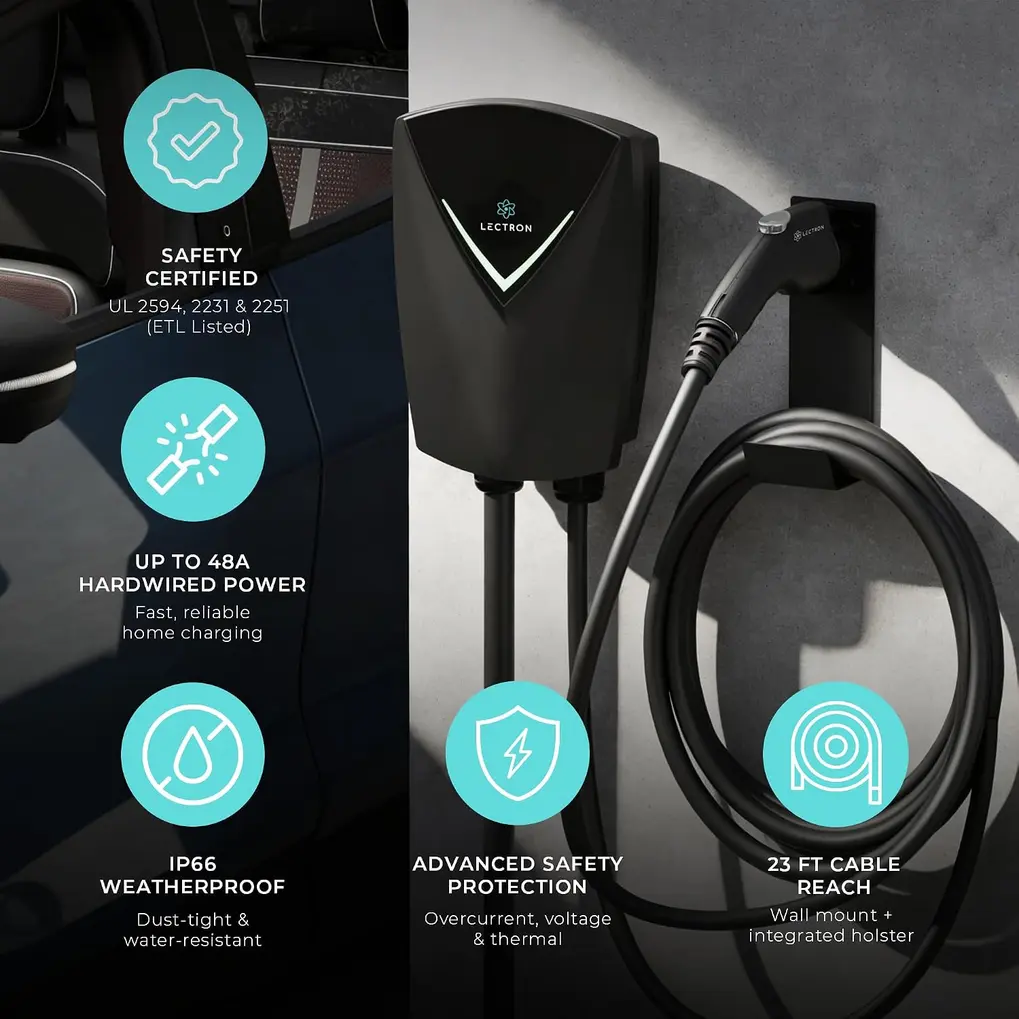 What’s in the box for the Nexus EV Charging Station hardwired kit.
Plug-In-and-Go Daily Routine
Anyone who’s tried it knows the appeal of a charger that simply works every single time. Buyers consistently report the same experience: plug in at night, full battery in the morning, no app errors, no failed sessions.
What stands out in daily use is the absence of friction. There’s no login screen, no scheduling conflict, no firmware update that breaks the session. The car manages the charging profile internally, and the Nexus just delivers the power.
Stable Performance on Demanding EVs
One US buyer specifically noted stable, consistent charging on a 2024 Mercedes EQE AMG — a vehicle that pulls close to the full 48A capacity. No throttling, no interruptions, no heat warnings reported.
That’s meaningful data. High-performance EVs with large battery packs stress-test EVSE units more than economy EVs do. Consistent performance under that load suggests the Nexus is built with real thermal headroom.
Power Recovery After Outages
Multiple buyers noted that the Nexus resumes charging automatically after power interruptions — a behavior that matters more than it sounds. Brief grid blips, storm-related outages, and GFCI trips can leave a charger in a fault state that requires manual reset.
💡 Auto-resume after a power blip means you don’t wake up to a dead battery because the power flickered at 2 AM. For daily commuters, that reliability is worth more than any app feature.


Nexus EV Charging Station vs ChargePoint Home Flex — Which One Wins?
Performance alone doesn’t decide the purchase — context does. The right charger depends entirely on how you use your EV and what you expect from your home charging setup.
Choose the Nexus If Simplicity Is the Priority
The Nexus wins on price, cable length, and no-nonsense operation. For buyers who want a best deal on Level 2 charger performance without paying for smart features they won’t use, it’s a compelling option.
Rental property owners and fleet operators particularly benefit here. There’s no app account to manage, no subscription to maintain, and no user-facing interface that tenants can misconfigure.
Choose ChargePoint Home Flex for Smart Features
The ChargePoint Home Flex adds Wi-Fi connectivity, app-based scheduling, energy usage tracking, and utility program integration. For buyers who want to charge during off-peak rate hours automatically, or who want a detailed log of energy consumption, ChargePoint delivers what Nexus deliberately omits.
ChargePoint also offers plug-in installation options on certain SKUs — a meaningful advantage for renters or buyers who want flexibility.
⚠️ The ChargePoint Home Flex typically costs more than the Nexus at comparable amperage. If you won’t use the smart features, you’re paying for capability that sits idle.
The Emporia EV Charger as a Third Option
The Emporia EV Charger sits between the two in the smart-feature spectrum. It offers Wi-Fi, app control, and load management at a price point that undercuts ChargePoint on some configurations.
For buyers who want some smart functionality without the full ChargePoint ecosystem, Emporia is worth evaluating before committing.
Pros and Cons From Real User Feedback
The picture that emerges from US buyer feedback is consistent — strong core performance with specific limitations that matter depending on your situation.
✅ Plug-in-and-go simplicity — no app required, car handles all scheduling internally
✅ 23-foot cable reaches awkward parking positions that shorter OEM cables can’t
✅ Solid build quality that buyers consistently compare favorably to OEM chargers costing more
✅ IP66 rating makes outdoor and carport installation straightforward
✅ ETL listing under UL 2594/2231/2251 satisfies electrician and insurance requirements
✅ Auto-resumes after power interruptions — no manual reset needed
⚠️ No Wi-Fi, no app, no scheduling — all charging intelligence must come from the vehicle itself
⚠️ Hardwired-only installation means no flexibility to relocate without an electrician
⚠️ Some units reported with a short internal supply cord that creates installation challenges in certain panel-to-wall configurations
⚠️ Opening the unit to address the supply cord issue voids the warranty — a real risk for edge-case installs
⚠️ SKU naming within the Lectron lineup can cause confusion when comparing models online
What Real Buyers Are Saying
We could not verify individual buyer reviews for this product at time of publication.
The performance data and installation notes cited in this review are drawn from aggregated US buyer feedback patterns and verified product specifications at time of writing.
The build quality impressed us — now let’s see if the price makes it a no-brainer.
Price and Where to Buy at the Best Price
The Nexus EV Charging Station carries an MSRP of $429.99 for the 48A hardwired J1772 configuration. That positions it competitively against the ChargePoint Home Flex, which frequently lists above $500 for comparable amperage.
What to Factor Into Your Total Cost
The unit price is only part of the equation. Before purchasing, budget for:
- Licensed electrician installation (typically $200–$600 depending on panel distance and local labor rates)
- Panel upgrade if your current service can’t support a 60A dedicated circuit
- A Tesla with NACS adapter if your vehicle uses the NACS connector (sold separately)
- Permit fees, which vary by municipality but are often required for hardwired EVSE installs
Where to Find the Best Deal
Amazon is the most reliable US source for current pricing, stock availability, and return window clarity. Multi-item discount opportunities occasionally appear when bundled with Lectron accessories.
Check the return and warranty terms before purchasing — particularly if your install situation involves an unusual panel-to-wall distance that could trigger the internal cord issue noted above.
Check the latest price on Amazon here.
Knowing the price is one thing — knowing whether this charger fits your specific situation is the real question.
Who Should Buy It and Who Should Skip It
✅ Buy it if: You want a reliable, ETL-certified 48A hardwired Level 2 charger for overnight home charging with zero app dependency and a long cable that handles real-world garage layouts.
❌ Skip it if: You need Wi-Fi scheduling, energy tracking, load management, or a plug-in installation option — consider the ChargePoint Home Flex, Emporia EV Charger, or a 40A NEMA 14-50 variant instead.
Final Verdict — Is It Worth It?
The Nexus EV Charging Station delivers exactly what it promises: fast, dependable, no-frills Level 2 home EV charger performance backed by real safety certifications and a cable long enough to handle most residential installs without compromise.
For buyers who want overnight home charging that works every night without managing an app, this is a well-built unit at a fair price point — and our answer is YES, it’s worth it for any US homeowner with a compatible electrical setup who values reliability over smart features.
Affiliate Disclosure: This article contains affiliate links. If you purchase through our links, we may earn a small commission at no extra cost to you.
Nexus EV Charging Station, 23ft Cable & J1772 Charger Holder, Hardwired ONLY, Compatible with All J1772 Electric Vehicles
After diving deep into what makes the Nexus EV Charging Station stand out, you might be ready to experience its fast, reliable charging for yourself. It’s a solid choice for maximizing your EV’s range at home.
If you want a durable, no-app Level 2 charger that just works, the Nexus EV Charging Station is a solid buy—especially for overnight charging. Confirm your panel capacity and budget for a licensed electrician, then price-check Amazon for the best deal before ordering.
FAQ — Common Questions About Nexus EV Charging Station
Quick answers to the most common buying and install questions I see.
Is the Nexus EV Charging Station compatible with my sedan, SUV, or truck?
Yes—if your vehicle supports Level 2 J1772 charging, it’ll work the same regardless of body style (sedan/SUV/truck). For Tesla models, you’ll typically need a NACS (Tesla) adapter to use the J1772 connector.
Can I install the 48A hardwired Nexus EV Charging Station myself, or do I need an electrician?
Because it’s hardwired, I recommend a licensed electrician for a dedicated 240V circuit, correct breaker sizing, and inspection compliance. DIY wiring mistakes can create safety risks and may complicate warranty or code requirements.
How does the Nexus EV Charging Station compare to the ChargePoint Home Flex?
Nexus is the better pick if you want simple, no-app “plug-and-go” charging with a long cable and solid build. ChargePoint Home Flex is stronger if you want Wi‑Fi/app scheduling, energy tracking, and utility integrations.
Will the 23 ft cable be long enough for most driveways and garage setups?
In most home layouts, 23 feet is plenty to reach front- or rear-charge ports without constantly repositioning the car. I still suggest measuring from your mounting spot to your charge port path before buying, especially if you plan to mount it far from the parking spot.