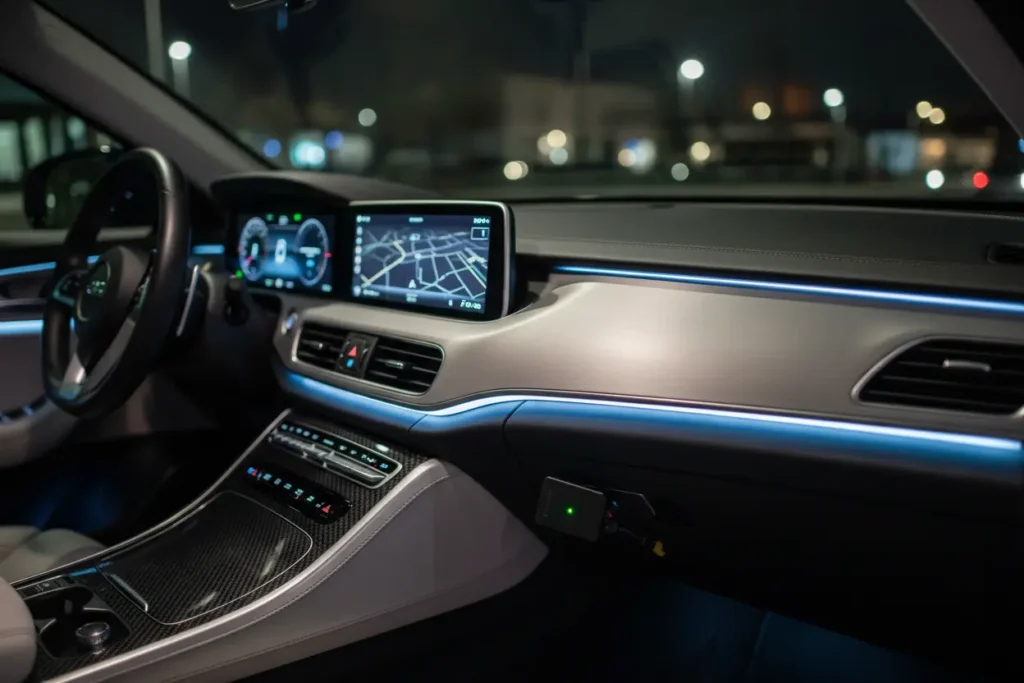
As car enthusiasts, we understand the constant worry about vehicle security. The thought of your prized possession going missing is a nightmare. What if you could have peace of mind with a hidden GPS tracker for car no monthly fee? This technology is more accessible than you think.
We’ve delved deep into the market to uncover reliable and effective hidden GPS trackers that won’t burden you with monthly subscriptions. Join us as we explore these innovative devices, helping you make an informed decision to protect your investment.
Understanding Hidden GPS Trackers
When we talk about a hidden GPS tracker, we aren’t just talking about a standard navigation unit. These devices are designed for stealth and security.
I like to think of them as silent guardians for your vehicle. They are significantly smaller than the GPS you use for directions.
Their primary purpose is to remain undetected by anyone inside or outside the car. This makes them invaluable for theft recovery.
Standard GPS devices are meant to be seen and interacted with. A hidden tracker is meant to be forgotten until you actually need it.
We define “hidden” through three main pillars: size, placement, and operation. These units are often no larger than a matchbox.
They don’t make sounds, they don’t have flashing lights, and they don’t require a constant connection to the dashboard.
In my years of reviewing car tech, I’ve seen how these devices have evolved from bulky boxes to sleek, magnetic tools.
They can be tucked into seat cushions, magnetic-mounted to the frame, or even wired deep behind the glove box.
The concept of “discreet operation” is what sets them apart. They wake up only when they detect movement or a request.
This ensures they don’t drain the car’s battery or give away their location through electronic signals when not in use.
Why Choose a Hidden GPS Tracker for Car No Monthly Fee?

We all suffer from subscription fatigue. It seems like every piece of tech today wants a piece of your monthly budget.
Choosing a tracker with no monthly fee is a game-changer for the savvy car owner. It represents a “set it and forget it” investment.
The most obvious benefit is the financial saving. Over two or three years, a $15 monthly fee adds up to hundreds of dollars.
By opting for a one-time purchase, you keep that money in your pocket while still enjoying premium security.
I’ve found that these no-fee models are perfect for people who want protection without the long-term commitment.
You don’t have to worry about a credit card expiring or a service being cut off right when your car is stolen.
There is also a significant convenience factor. You own the hardware and the data path entirely.
Many of these devices utilize Bluetooth crowdsourcing or your own SIM card with a pay-as-you-go data plan.
This gives you total control over how much you spend and how the device communicates with your phone.
For many enthusiasts, the appeal is the simplicity. You buy the device, install it, and it just works.
We believe that vehicle security shouldn’t be a luxury that requires a recurring bill to maintain.
Essential Features for Your Stealth Tracker
When you’re shopping for a hidden tracker, you can’t just pick the cheapest one. You need specific performance metrics.
The first thing we always look at is battery life. A hidden tracker is useless if it dies after two days.
Look for units that offer “sleep modes” or have large internal batteries that last weeks or even months.
Next, consider the accuracy of the location data. You want a device that uses multiple satellite systems (GPS, GLONASS, Galileo).
The physical size is non-negotiable. It must be small enough to fit into tight crevices without being noticed.
We also prioritize ease of installation. Some of the best units are magnetic, allowing for a five-second setup.
Others might require a simple two-wire connection to the car’s power, which provides infinite battery life.
Geofencing capabilities are a must-have feature for any modern tracker. This allows you to set digital boundaries.
If your car leaves a specific area, like your driveway or workplace, you get an instant alert on your phone.
| Feature | Why It Matters |
|---|---|
| Battery Life | Ensures the device stays active during a long recovery process. |
| Waterproofing | Essential if you plan to mount the tracker under the vehicle frame. |
| Signal Strength | Allows the device to transmit even from inside metal car parts. |
| App Interface | A clean app makes tracking your car intuitive and fast. |
Don’t forget about data storage. Some trackers save “dead zones” and upload the path once a signal is found.
This ensures you have a complete history of where the vehicle has been, even in tunnels or remote areas.
Top Hidden GPS Trackers Reviewed
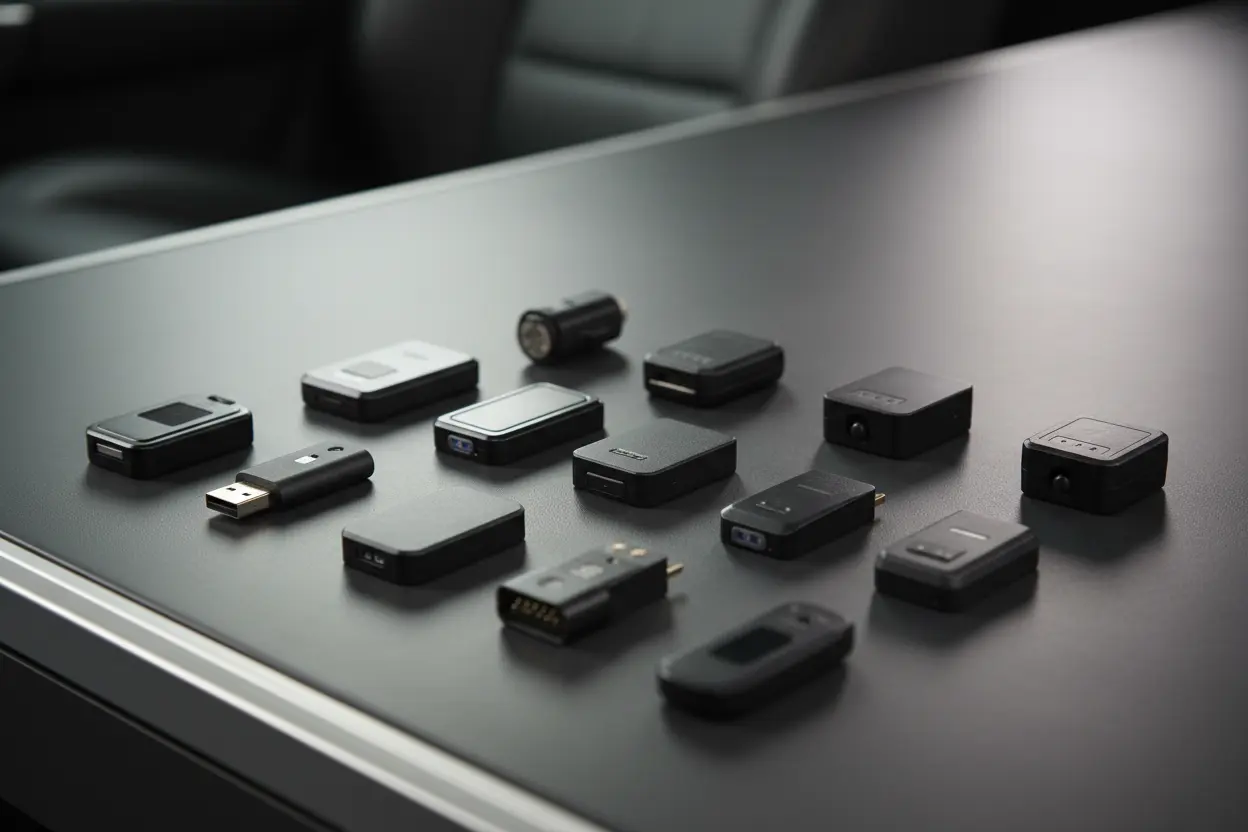
We have tested several units that claim to offer “no fee” tracking. Here are the top performers currently on the market.
The Apple AirTag has become a surprising favorite for many car owners. While not a “true” GPS, its network is massive.
It’s incredibly cheap, has a one-year battery, and uses the millions of iPhones nearby to update its location.
However, it has anti-stalking features that might alert a thief if they also have an iPhone.
For a more professional approach, we look at SIM-based trackers like the TKSTAR series.
These require you to buy the device once and insert your own prepaid SIM card for tiny data costs.
Another great option is the Vyncs GPS. While it has an activation fee, many versions offer the first year of service for free.
It plugs directly into the OBD-II port, making it easy to install, though less “hidden” than battery-powered units.
If you want something truly rugged, the LandAirSea 54 is often cited, though its “no fee” options are limited to specific configurations.
We recommend looking for devices that specifically advertise “Lifetime Subscription Included” in the purchase price.
These might cost more upfront, but they provide the most seamless experience for the user.
Always check the network compatibility (4G LTE is standard now) to ensure the device won’t become obsolete.
Installation Secrets for Optimal Stealth
Installing a hidden tracker is an art form. If a thief finds it in ten seconds, it’s worthless.
We always recommend avoiding the obvious spots like the glove box or the center console.
The first place I check is under the dashboard, but high up near the firewall where wires are cluttered.
Another “pro tip” is to hide the device inside the plastic trim of the door pillars or the trunk.
These areas are rarely inspected by thieves and provide enough “plastic” for the signal to pass through easily.
If your tracker is waterproof, the underside of the car is a fantastic location for a magnetic mount.
Place it near the rear bumper or inside the hollow of the frame rails, away from the hot exhaust pipes.
Inside the trunk, you can often peel back the carpet and tuck the tracker near the spare tire well.
We also suggest placing it inside a headrest or underneath the rear parcel shelf where the speakers are.
Always ensure the “GPS side” of the device is facing a non-metal surface whenever possible.
Metal is the enemy of GPS signals. It acts like a Faraday cage, blocking the satellite connection.
Once installed, test the signal from your phone before you put all the car panels back together.
How No-Fee GPS Trackers Operate
You might wonder: “How can they provide tracking without a monthly bill?” The answer lies in the infrastructure.
Many no-fee trackers use the Global Navigation Satellite System (GNSS) to get their coordinates.
The cost usually comes from transmitting that data to your phone. No-fee units bypass this in three ways.
First, some use Bluetooth Mesh Networks. Devices like AirTags or Tiles don’t have their own cellular chips.
They “piggyback” on the internet connection of nearby smartphones to send their location to the cloud.
Second, many units are “Logger” style. They don’t provide real-time tracking but record the route to an internal SD card.
You have to retrieve the device to see where the car has been. This is great for fleet monitoring but bad for theft.
The third method is the Pay-As-You-Go SIM. You provide the cellular connection yourself.
Since a GPS tracker only sends tiny bits of text data, a $10 prepaid card can last you an entire year.
We find this to be the most reliable method for those who want real-time updates without a contract.
It puts the power back in your hands, allowing you to choose the cheapest local carrier.
Legal Considerations for Car Tracking
Before you hide a tracker in a car, we must discuss the legal and ethical landscape.
Privacy laws in the US are strict. Generally, you can track a vehicle that you own.
If the car is in your name, you have a legal right to know its location for security purposes.
However, tracking a vehicle owned by someone else without their explicit consent can lead to criminal charges.
This includes tracking a spouse, an employee, or a friend. It is often classified as stalking or harassment.
We always advise checking your specific state and local regulations, as laws vary significantly across the country.
In some states, you must notify anyone driving the car that a tracking device is present.
If you are using the tracker for business purposes, ensure it is written into the employment contract.
Ethically, transparency is always the best policy. Use these tools for protection, not for spying.
We are not lawyers, so if you are in a “grey area,” please consult with a legal professional first.
Remember, the goal of a hidden tracker is vehicle recovery, not infringing on the privacy of others.
Maximizing Your Tracker’s Battery Life
If you choose a battery-powered unit, power management is your new best friend.
The biggest drain on a tracker’s battery is the frequency of reporting.
If the device updates its location every 30 seconds, it will likely die within a few days.
We recommend setting the update interval to 5 or 10 minutes if the car is in motion.
Many apps allow you to set a “Power Saving Mode” where the device only wakes up if it feels a vibration.
This “vibration wake-up” is essential for trackers that spend most of their time parked.
Proper charging practices also play a role. Don’t leave the battery at 0% for long periods.
If you are using a wired tracker, ensure it has a low-voltage cutoff so it doesn’t kill your car’s main battery.
We also suggest checking the battery levels through the app at least once a week.
Extreme temperatures—both hot and cold—can significantly reduce battery efficiency.
Try to place the tracker in a spot that stays relatively temperate, like the interior cabin rather than the engine bay.
By following these steps, you can ensure your silent guardian is always ready when you need it most.
Your Car’s Silent Guardian Awaits!
Choosing the right hidden GPS tracker for car no monthly fee is a smart move for any car owner seeking enhanced security without ongoing costs. We hope our insights have illuminated the path to finding a device that perfectly fits your needs, offering peace of mind on every journey.
What are your thoughts on these innovative security solutions? We’d love to hear your experiences or questions in the comments below. Share this guide with fellow car enthusiasts who value their vehicle’s safety!
FAQ – Common Questions About Hidden GPS Trackers
We’ve compiled the most frequent questions we receive about finding and using a hidden GPS tracker for car no monthly fee to help you make the best choice for your vehicle.
1. How does a hidden GPS tracker for car with no monthly fee actually work?
Most of these devices function by using a pay-as-you-go SIM card or local data storage, allowing you to avoid expensive recurring subscriptions. We’ve found that you typically only pay for the specific SMS or data packets used when you request a location update.
2. Where is the best place to install a hidden GPS tracker for maximum stealth?
We recommend discreet locations such as behind the dashboard, inside a seat cushion, or under the rear bumper using a strong magnetic case. The goal is to choose a spot that is difficult for a thief to find while still allowing the device to receive a clear GPS signal.
3. Is it legal to use a hidden GPS tracker for car no monthly fee in the US?
Generally, it is legal to track a vehicle that you own, but laws regarding tracking someone else without their consent vary significantly by state. We always suggest checking your local and state regulations to ensure you are using the device ethically and legally.
4. Can I still get real-time tracking without paying a monthly subscription?
Yes, many no-fee models offer real-time capabilities via mobile apps or SMS alerts using your own cellular data plan. While they may lack some “premium” cloud features, they are highly effective for on-demand location tracking and theft recovery.
5. How long does the battery typically last on these stealth trackers?
Battery life depends on the reporting frequency, but many models we’ve tested can last anywhere from two weeks to six months. We recommend using power-saving modes and optimizing the update intervals to ensure your tracker stays active for as long as possible.