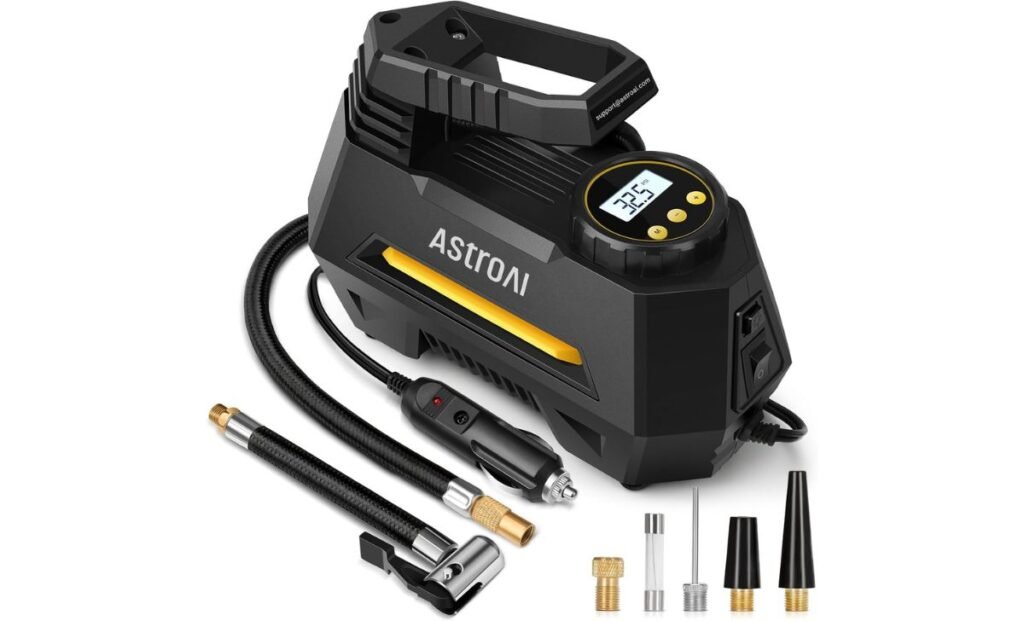
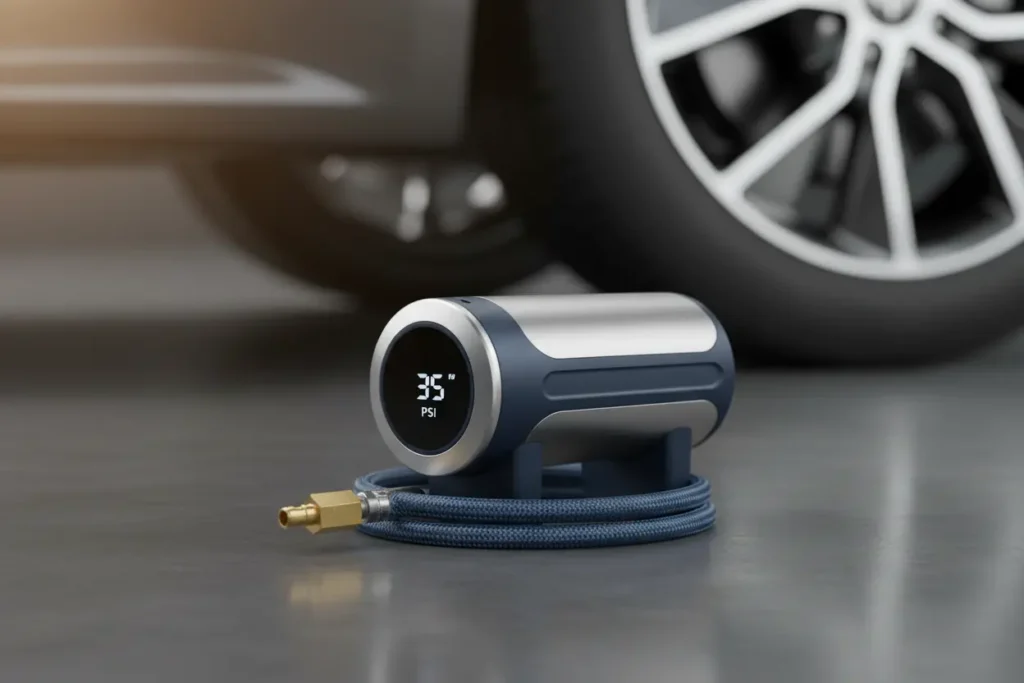
Como entusiastas automotivos, sabemos que a estrada pode ser imprevisível. Um pneu furado ou com baixa pressão pode transformar uma viagem tranquila em um pesadelo. É por isso que um compressor de ar portátil para pneus não é apenas um luxo, mas uma necessidade para qualquer motorista consciente.
Nós, da Car Accessory Spot, estamos aqui para guiá-lo. Neste artigo, vamos mergulhar fundo no mundo dos compressores de ar portáteis, explorando suas funcionalidades, benefícios e como escolher o modelo ideal para manter seus pneus sempre em perfeitas condições, garantindo sua segurança e tranquilidade.
Why a Portable Air Compressor is Essential
We have all been there, driving down a lonely highway when that dreaded TPMS light flickers on the dashboard.
It is a moment of instant anxiety that every driver wants to avoid at all costs.
A portable air compressor for tires is not just another gadget; it is your first line of defense.
In my years of exploring the automotive world, I have seen how a simple drop in pressure ruins a trip.
Properly inflated tires are crucial for your safety, providing the grip and handling you need during sharp turns.
Beyond safety, we must talk about the financial benefits of keeping your tires at the optimal PSI.
Under-inflated tires increase rolling resistance, which means your engine works harder and burns more fuel.
By maintaining the right pressure, you can improve your gas mileage by up to 3% in some cases.
Furthermore, a compressor allows for preventive maintenance right in your own driveway or garage.
You no longer need to hunt for a gas station with a working air pump or fumble for quarters.
It provides the convenience of checking your pressure before a long road trip, ensuring a smooth ride.
In emergency scenarios, such as a slow leak, it can be the difference between reaching a shop or being stranded.
We believe that every car enthusiast should view this tool as a non-negotiable part of their trunk kit.
It is about self-reliance and the peace of mind that comes from knowing you are prepared for anything.
Key Features to Look for in a Tire Inflator
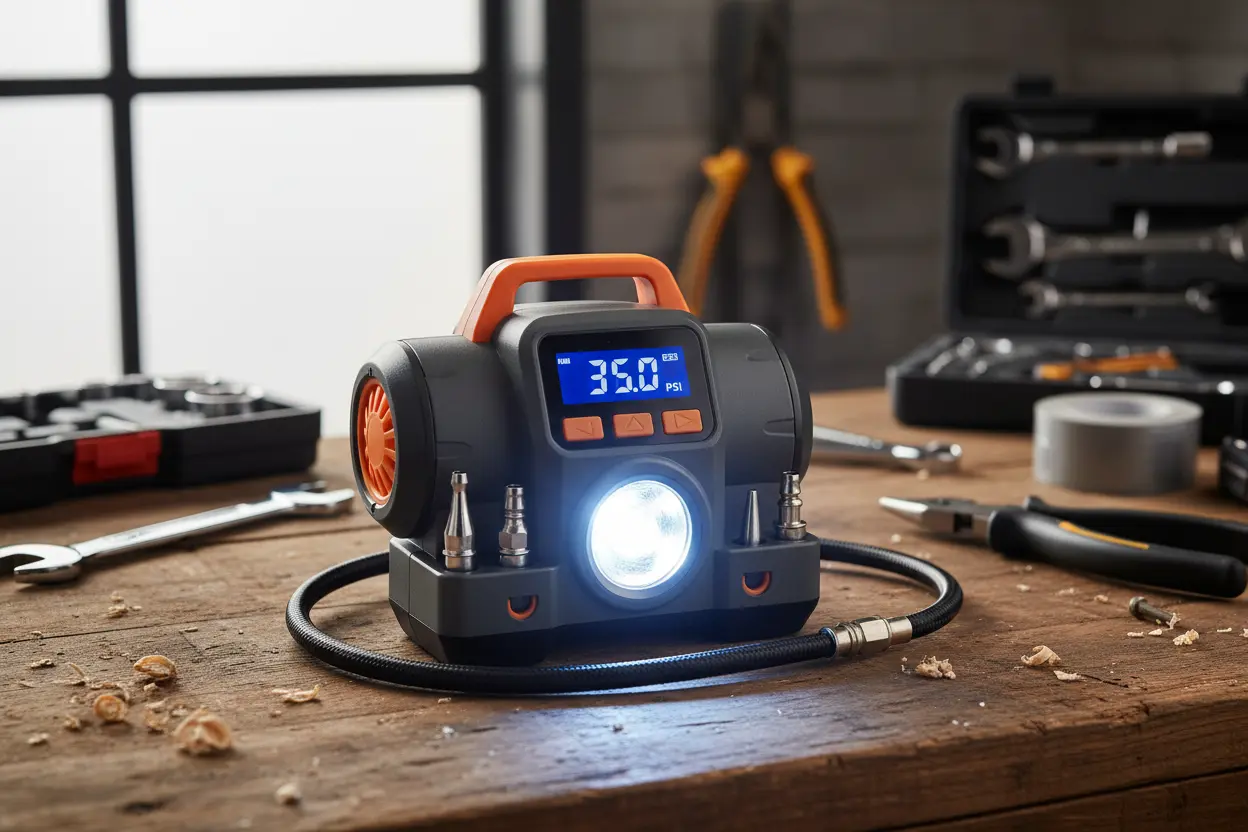
When you start shopping, the sheer number of options can feel overwhelming for any buyer.
I always tell my readers to look past the flashy plastic and focus on the inflation speed.
A high-quality motor should be able to pump a standard tire from 30 to 35 PSI in under a minute.
Accuracy is the next pillar of a great device, as an incorrect reading is worse than no reading at all.
Look for digital gauges with a backlit display so you can read the numbers clearly in the dark.
The power source is a critical decision that depends entirely on your specific lifestyle and needs.
Some models plug into your car’s 12V cigarette lighter, while others use rechargeable lithium-ion batteries.
We highly recommend looking for a unit that features an auto-shutoff function for added safety.
This allows you to set the desired pressure and walk away while the machine does the heavy lifting.
It prevents over-inflation, which can lead to a bumpy ride or even a dangerous tire blowout.
Build quality and the materials used in the hose are also vital for long-term reliability.
A braided nylon hose is much more resistant to heat and friction than cheap rubber alternatives.
Lastly, consider additional features like built-in LED flashlights and multiple nozzle attachments for sports gear.
These small extras transform a simple pump into a versatile multi-tool for your entire household.
Top Portable Air Compressor for Tires Reviews
Finding the perfect portable air compressor for tires requires comparing real-world performance and value.
We have tested several models to see which ones actually deliver on their marketing promises.
The market is currently divided into premium heavy-duty units and compact, ultra-portable handheld devices.
Below, we have organized a comparison of the top contenders based on our rigorous testing standards.
| Model Type | Best For | Key Advantage | Price Range |
|---|---|---|---|
| The Powerhouse | Trucks & SUVs | High CFM (Air Flow) | Premium |
| The Commuter | Daily Drivers | Compact & Cordless | Mid-Range |
| The Budget King | Emergencies | Reliable 12V Power | Affordable |
The Powerhouse models are designed for those who venture off-road or drive larger vehicles.
They offer incredible durability and can handle high-pressure demands without overheating.
However, they are often bulkier and might require a direct connection to your car battery terminals.
The Commuter’s choice is usually a cordless, handheld device that fits perfectly in a glove box.
These are incredibly user-friendly and perfect for topping off pressure during a grocery run.
While they are convenient, they do require you to keep the internal battery charged regularly.
The Budget King options usually rely on a long 12V cord that reaches all four tires easily.
They offer the best value for money and never run out of juice as long as your car is running.
We found that the most expensive option isn’t always the “best” for every single person.
You should choose based on your specific vehicle type and how often you plan to use the device.
Always check user reviews for mentions of long-term motor reliability before making your final click.
How to Use Your Portable Tire Inflator Safely
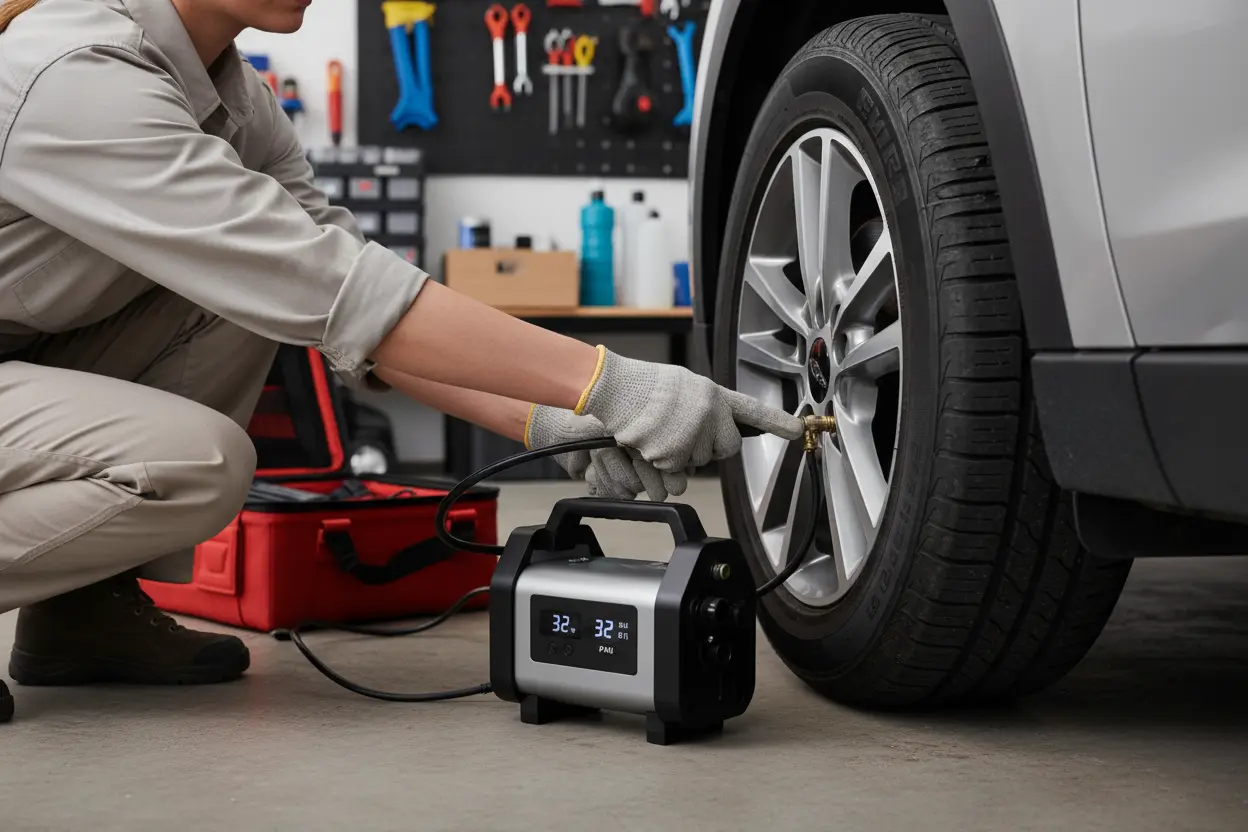
Operating a compressor is simple, but following a safe protocol is essential for your protection.
First, always check your vehicle’s recommended PSI, usually found on a sticker inside the driver’s door.
Never rely on the maximum pressure listed on the tire sidewall, as that is for seating the bead.
Park your car on a flat, level surface and engage the parking brake before you begin.
If you are using a corded model, start your engine to prevent draining your car battery.
Unscrew the valve cap from your tire and keep it in a safe place like your pocket.
Firmly attach the compressor’s nozzle to the valve stem; you should hear a brief hiss of air.
Once the connection is secure, the gauge will display your current tire pressure immediately.
Set your target PSI on the digital interface and press the start button to begin inflation.
Stay near the device and listen for any unusual noises or excessive vibration during the process.
Be careful when touching the hose after use, as it can become extremely hot due to friction.
Once the target is reached, quickly disconnect the nozzle and replace the valve cap tightly.
We suggest checking all four tires, including the spare, to ensure your entire set is uniform.
Safety is about patience and ensuring every connection is airtight before you flip the switch.
Maintenance Tips for Longevity of Your Compressor
A portable air compressor is a mechanical investment that deserves proper care and attention.
If you treat it well, it will be there for you during critical moments for many years.
The most important rule is to keep the unit clean and dry at all times.
Dust and grit can enter the intake valves, causing the motor to wear out prematurely.
After each use, wipe down the exterior with a microfiber cloth to remove road salt or dirt.
Always inspect the air hose for cracks, kinks, or signs of dry rot before plugging it in.
A leaking hose will force the motor to work twice as hard, leading to overheating issues.
When it comes to storage, avoid leaving the device in a boiling hot trunk during the summer.
Extreme temperatures can degrade the internal seals and damage sensitive lithium batteries.
If you own a cordless model, try to charge the battery at least once every three months.
This prevents the battery cells from falling into a deep discharge state, which kills their lifespan.
Always follow the manufacturer’s duty cycle—most small pumps need a rest after 10 minutes of work.
Ignoring these rest periods is the fastest way to burn out the internal compressor piston.
We recommend keeping the manual in your glove compartment for quick reference on maintenance.
A little bit of proactive care goes a long way in maintaining peak performance and reliability.
Comparing Corded vs. Cordless Models
Choosing between corded and cordless is the biggest fork in the road for most buyers.
Each style has its own set of pros and cons that affect your daily user experience.
Corded models (12V) are the traditional choice and offer a sense of “infinite” power supply.
As long as your car has a working cigarette lighter, you will never run out of air.
They are generally more affordable and lighter because they don’t house a heavy battery pack.
However, managing a long power cord can be a hassle, especially in rainy or muddy conditions.
You also have to navigate the cord through doors or windows to reach the rear tires.
On the other hand, cordless models offer the ultimate “grab-and-go” convenience and freedom.
There are no wires to trip over, and you can use them for bikes or balls far from the car.
They are perfect for quick top-offs and are much easier to handle for those with limited mobility.
The downside is the battery management; a dead battery makes the tool completely useless in a pinch.
Some high-end cordless units now offer a hybrid “dual power” mode for the best of both worlds.
| Feature | Corded (12V) | Cordless (Battery) |
|---|---|---|
| Portability | Limited by wire | High (Go anywhere) |
| Power Supply | Constant from car | Needs recharging |
| Ease of Use | Moderate (Cord management) | Very Easy |
| Reliability | High (No battery to fail) | Moderate (Battery degredation) |
We suggest a corded model if you want a “set it and forget it” tool for your trunk.
If you value speed and versatility for multiple tasks, a cordless unit is the superior choice.
Consider your environment—if you live in extreme cold, batteries may struggle to hold a charge.
Ultimately, both types will get the job done; it just comes down to your personal workflow.
Mantenha Seus Pneus Sempre Prontos!
Chegamos ao fim da nossa jornada sobre os compressores de ar portáteis. Esperamos que este guia completo tenha fornecido todas as informações necessárias para você fazer uma escolha informada e manter seus pneus sempre na pressão ideal. Lembre-se, a segurança na estrada começa com a manutenção adequada do seu veículo.
Qual a sua experiência com compressores de ar portáteis? Compartilhe suas dicas e dúvidas nos comentários abaixo! Sua opinião é muito valiosa para a comunidade Car Accessory Spot.
FAQ – Common Questions About Portable Air Compressors for Tires
We’ve compiled the most frequent questions we receive to help you make the best choice for your vehicle and peace of mind on the road.
1. How long does it take for a portable air compressor for tires to inflate a flat?
Most high-quality models we recommend can typically inflate a standard car tire from flat to 35 PSI in about 3 to 5 minutes. The exact speed depends on the unit’s airflow rate (CFM) and the overall size of the tire you are inflating.
2. Can I use my portable air compressor for tires for things other than vehicle maintenance?
Yes, these tools are incredibly versatile! Most units come with a variety of nozzle adapters, allowing us to easily inflate bicycle tires, sports equipment like basketballs, and even air mattresses for camping trips.
3. Should I choose a corded 12V model or a cordless battery-powered one?
If you want unlimited runtime without worrying about charging, a corded 12V model that plugs into your car’s outlet is ideal. However, we love cordless models for their ultimate portability and ease of use since you don’t have to manage cables around the vehicle.
4. How accurate are the digital pressure gauges on these portable devices?
Modern digital inflators are remarkably precise, often accurate within +/- 1 PSI. For the best results, we suggest checking your tires when they are “cold” and occasionally verifying the reading with a high-quality manual pressure gauge.
5. Will using a 12V portable air compressor for tires drain my car battery?
While these devices are efficient, we always recommend keeping your engine running while using a corded 12V compressor. This provides the unit with consistent power for faster inflation and ensures you don’t accidentally put unnecessary strain on your car’s battery.