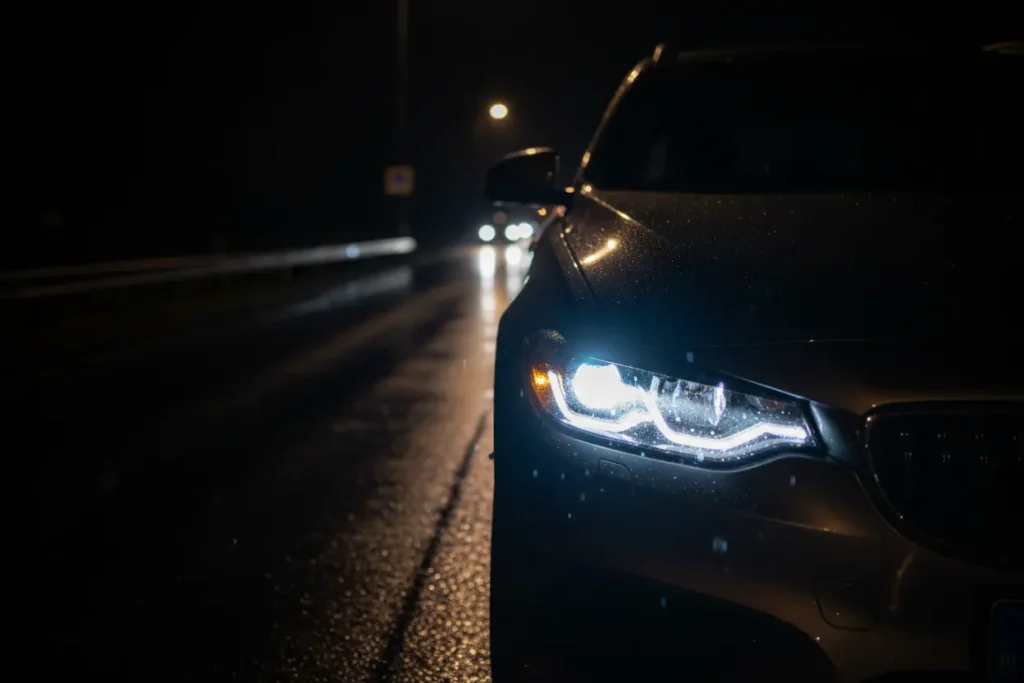
Are you tired of dim, yellow headlights that barely illuminate the road ahead? Upgrading to an LED headlight bulbs conversion kit can dramatically transform your night driving experience, offering superior brightness and clarity. It’s a game-changer for safety and aesthetics.
Here at Car Accessory Spot, we understand the desire for optimal performance. That’s why I’m diving deep into the world of LED conversions, helping you navigate the options to find the best LED headlight bulbs conversion kit that perfectly suits your vehicle and needs.
Why Upgrade to LED Headlights?
If you are still driving with standard halogen bulbs, you are essentially navigating the world in low definition.
I’ve spent years testing various lighting setups, and the jump from halogen to a high-quality LED conversion kit is the single most impactful upgrade you can make.
Halogen bulbs rely on a thin filament that gets incredibly hot and wastes a massive amount of energy just to produce a dim, yellowish light.
In contrast, LED (Light Emitting Diode) technology is vastly more efficient, turning almost all its energy into pure, crisp illumination.
When we talk about safety, visibility is everything; LEDs provide a wider and further reach, allowing you to spot hazards long before they become a problem.
Beyond the safety aspect, there is no denying the modern aesthetic an LED kit brings to your machine.
That “warm” yellow glow of old bulbs makes even a modern car look dated, while a 6000K cool white LED instantly refreshes your vehicle’s face.
We also have to consider longevity, as halogens typically last about 1,000 hours, whereas a premium LED kit can easily exceed 50,000 hours.
This means you aren’t just buying better light; you are buying the last set of headlight bulbs you will likely ever need for that vehicle.
Understanding LED Headlight Conversion Kits
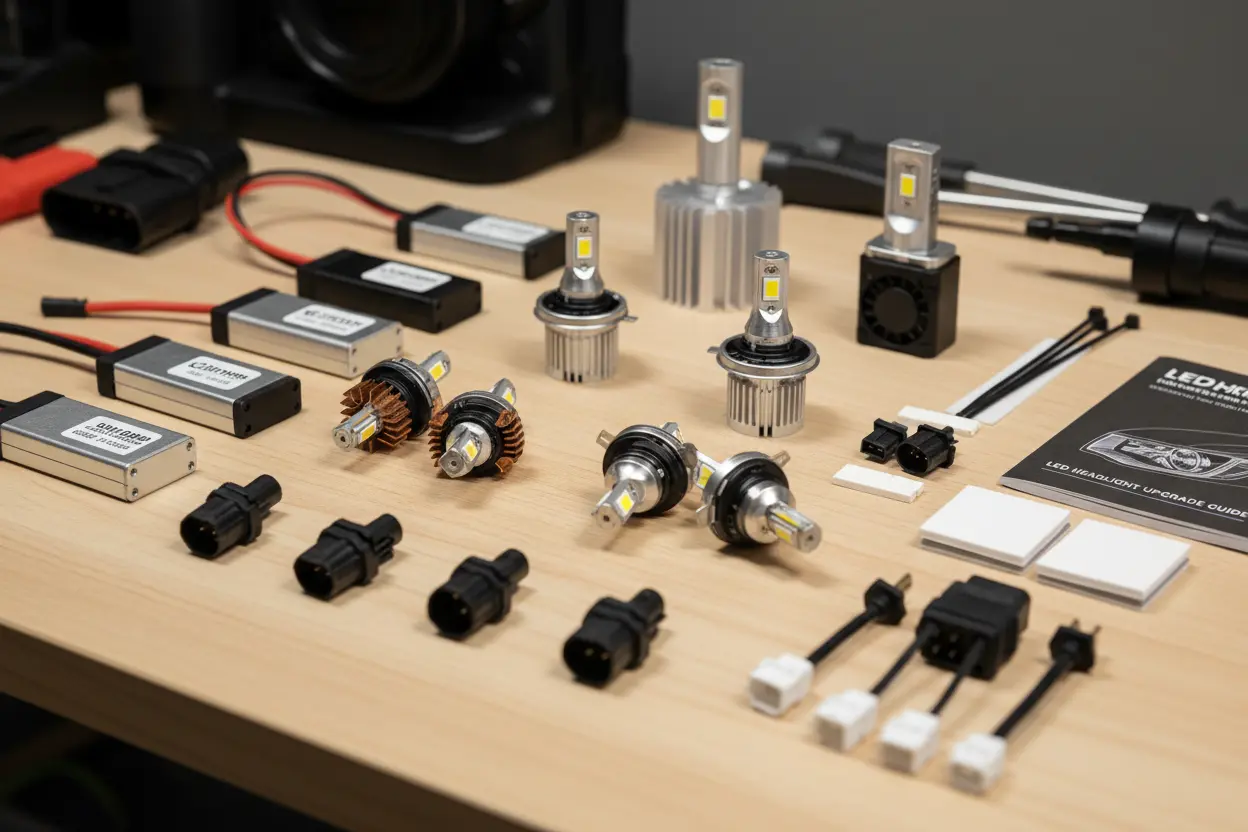
To the uninitiated, an LED conversion kit might look like a simple bulb, but it is actually a sophisticated piece of engineering.
A standard kit consists of the LED chips, the heat dissipation system, and the external or internal driver.
The “chips” are the heart of the unit; we usually look for CSP (Chip Scale Package) or COB (Chip on Board) technology for the best light density.
The driver is the brain of the operation, regulating the voltage to ensure the LEDs don’t burn out from power surges.
Because LEDs generate heat at their base, a robust cooling system is vital, often featuring high-speed fans or “space-grade” aluminum heat sinks.
Most kits today are designed for Plug-and-Play installation, meaning the connectors match your factory harness perfectly.
We always recommend kits that feature 360-degree adjustable lockers, which allow you to rotate the bulb to achieve the perfect beam angle.
Without this adjustability, you risk throwing light in the wrong direction, which defeats the purpose of the upgrade.

- 12X Brighter Than Halogen: Experience a significant brightness boost with Termitor 9005 9006 bulbs combo, offering 12X m…
- Perfect Beam Pattern for Ultimate Visibility: Achieve flawless lighting with our precisely engineered beam pattern. Afte…
- Unmatched Performance & Durability: Built to last, our Termitor 9005+9006 bulbs feature premium aviation aluminum housin…
Essential Factors When Choosing Your Kit
Choosing the “best” kit isn’t just about picking the highest number on the box; it’s about balance and compatibility.
The first thing most people look at is Lumens, which measures the total amount of visible light emitted.
While 12,000 or 20,000 lumens sound impressive, raw power is useless without control, so look for a kit that emphasizes “effective lumens.”
Color Temperature, measured in Kelvin (K), dictates the color of the light; 6000K to 6500K is the “Sweet Spot” for a clean, daylight-white look.
Going higher than 8000K results in a blue or purple tint that actually reduces visibility in rain or fog and can attract unwanted police attention.
The Beam Pattern is perhaps the most critical factor for road safety and passing inspections.
A poorly designed LED will “scatter” light everywhere, blinding oncoming drivers and leaving dark spots on the road in front of you.
We always check for CANbus Compatibility, which prevents your car’s computer from throwing “bulb out” error codes or causing the LEDs to flicker.
Finally, consider the Cooling Method; if you live in a very hot climate, a kit with an active fan is generally more reliable than a passive heat sink.
Best LED Headlight Bulbs Conversion Kit
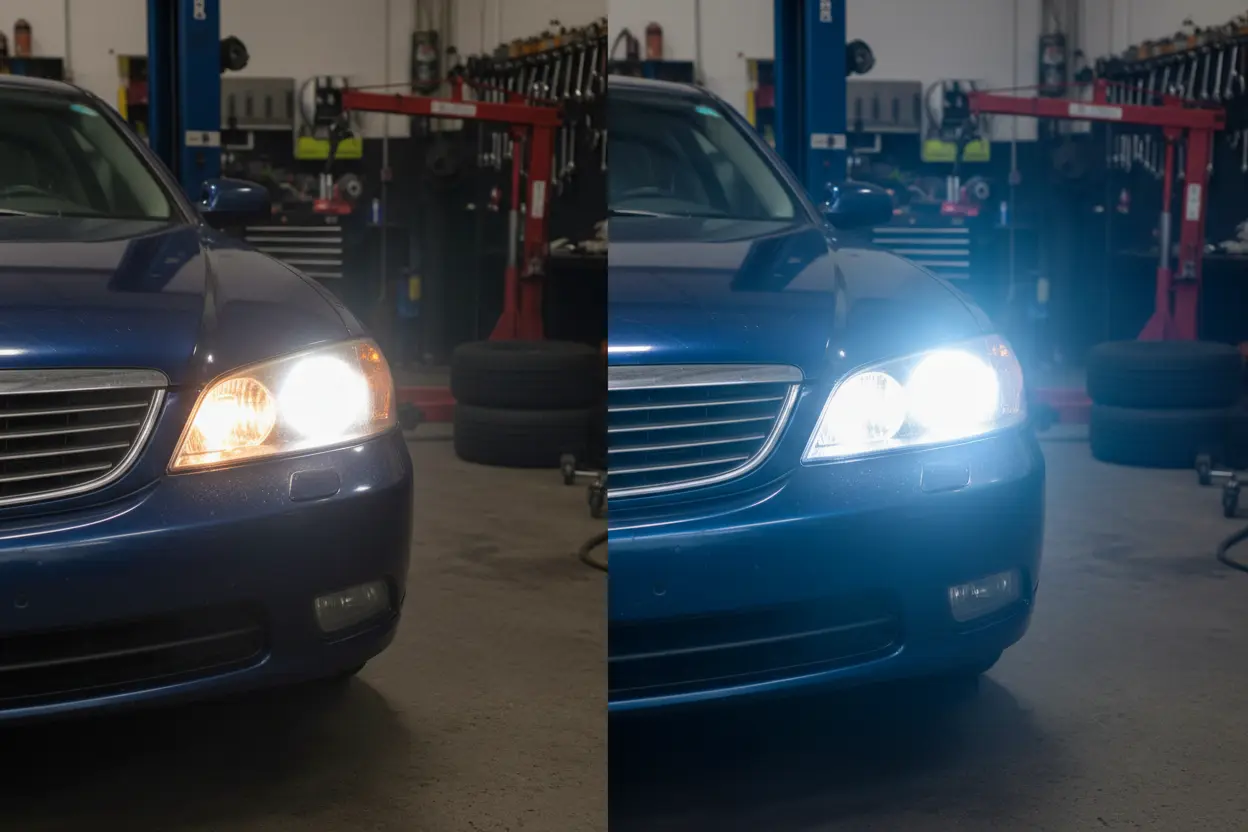
After testing dozens of kits on the market, we have identified the top performers that balance brightness, durability, and value.
| Category | Recommended Kit | Key Strength |
|---|---|---|
| Best Overall | Fahren Termitor Series | Incredible brightness and perfect beam focus. |
| Best Budget | SEALIGHT S1 Series | Fanless design, easy install, very affordable. |
| Most Durable | Beamtech S1 Series | Passive cooling (no fan to fail) and long lifespan. |
| Highest Power | Auxito Y13 Series | Massive lumen output for off-road and rural driving. |
The Fahren Termitor stands out to me because it uses an ultra-thin heat sink that mimics the position of a halogen filament perfectly.
This design ensures that the light hits your headlight’s reflectors exactly where it should, providing a sharp cut-off line.
For those who want a silent and simple setup, the SEALIGHT S1 is a fantastic “entry-level” premium option.
It lacks a fan, which means there is one less moving part to break, though it isn’t quite as bright as the high-end Fahren or Auxito models.
If you frequently drive in pitch-black rural areas, the Auxito Y13 offers a “wall of light” effect that is truly transformative.
However, be prepared to spend a few extra minutes tucking away the external drivers that come with these high-output kits.
Installation Guide for Your LED Kit
One of the reasons I love LED kits is that you don’t need to be a mechanic to install them; a DIY enthusiast can do it in 20 minutes.
First, ensure your vehicle is turned off and the old halogen bulbs have had time to cool down—they get surprisingly hot!
Open the hood and locate the dust cover or the back of the headlight assembly; you may need to twist it to remove it.
Step 1: Disconnect the factory wiring harness from the old bulb and release the metal spring clip or twist the bulb out.
Step 2: Insert the new LED bulb into the housing. This is where you might need to rotate the bulb to ensure the LED chips are facing 3 and 9 o’clock.
Step 3: Connect the LED’s plug to your vehicle’s harness. If it doesn’t turn on, try flipping the plug—LEDs have polarity (positive and negative).
Step 4: Secure the driver (if external) using zip ties so it doesn’t rattle against the frame while you drive.
If you find that your headlights are “flickering” after installation, you might need an additional anti-flicker decoder, which is a simple inline plug.
Don’t be afraid to seek professional help if your car requires removing the entire bumper to access the headlights, as is common on some newer European models.
Legal Considerations for LED Headlights
Before you hit the “buy” button, we need to talk about the legal landscape in the United States.
The Department of Transportation (DOT) and Federal Motor Vehicle Safety Standard (FMVSS) No. 108 govern automotive lighting.
Technically, many LED conversion kits are marketed as “for off-road use only” because they change the original equipment manufacturer (OEM) specs.
The primary legal concern isn’t the color of the light, but the beam pattern and potential glare for other drivers.
If your LED kit produces a messy beam that blinds others, you are much more likely to be pulled over by law enforcement.
We always recommend choosing kits that are labeled as DOT-compliant, which means they have been designed to meet safety standards.
States like California have particularly strict rules, so it is always wise to check your local vehicle code before making a permanent change.
Safety is a shared responsibility; a “legal” light is one that helps you see without preventing others from seeing.
Maintaining Your New LED Headlights
While LEDs are “set and forget” for the most part, a little preventative maintenance goes a long way.
Every few months, I recommend checking the cooling fans (if your kit has them) to ensure they aren’t clogged with road dust or debris.
If the fan stops spinning, the LED chips will overheat and dim significantly or fail prematurely to protect themselves.
Ensure that your headlight lenses are clear; a foggy or yellowed plastic lens will scatter even the most powerful LED light.
If you notice a slight flicker or one bulb seems dimmer, check the electrical connections for signs of corrosion or moisture.
Using a small amount of dielectric grease on the plug terminals can prevent moisture from causing issues in the long run.
If a bulb does fail, most premium brands offer a 2-to-3-year warranty, so keep your digital receipt handy.
Most “failures” are actually just loose connections or a blown fuse, so always troubleshoot the simple stuff first.
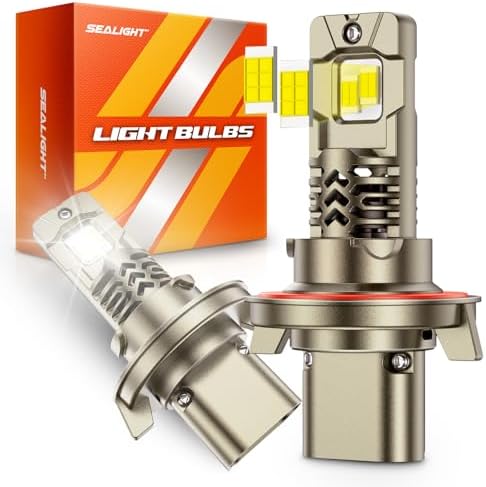
- 【10X Brighter – Newly Enhanced】SEALIGHT H13/9008 LED bulbs feature 24 high-performance chips, delivering up to 9 times t…
- 【Precision-Focused Safety Beam】Engineered to replicate the beam pattern of halogen lamps, the new SEALIGHT H13/9008 LED …
- 【Easy 3-Minute Installation】Designed to fit seamlessly into your existing housing and factory socket without any modific…
Are LED Headlights Worth the Investment?
When we look at the big picture, the answer is a resounding yes.
The initial cost of a high-quality kit—usually between $40 and $100—is higher than a $15 halogen bulb.
However, when you factor in that you would replace those halogens five or six times over the lifespan of one LED kit, the math favors the LED.
Beyond the money, you cannot put a price on the added safety of seeing a deer or a debris pile 50 feet sooner on a dark highway.
The reduction in eye strain during long night drives is another “hidden” benefit that most users notice immediately.
We believe that every driver deserves the clarity and confidence that modern lighting technology provides.
Whether you are looking to revitalize an old truck or optimize a new commuter car, a Best LED Headlight Bulbs Conversion Kit is the gold standard.
It is a small investment that pays dividends in safety, style, and peace of mind every time the sun goes down.
Light Up Your Path with Confidence!
Choosing the best LED headlight bulbs conversion kit is more than just an upgrade; it’s an investment in your safety and driving experience. We are dedicated to bringing you the most honest reviews so you can make the right choice, transforming your night drives.
Which kit caught your eye? Share your experiences or questions in the comments below! Your perspective helps illuminate the way for other automotive enthusiasts.
FAQ – Common Questions About the Best LED Headlight Bulbs Conversion Kit
We know that upgrading your lighting can raise a few questions. Here are the most common inquiries we receive to help you make the right choice for your vehicle.
While many kits are marked for off-road use, many of our top recommendations are designed to meet DOT standards. We always suggest checking your specific state regulations and ensuring your best led headlight bulbs conversion kit is properly aimed to avoid blinding other drivers.
Yes, most kits we review are designed for a “plug-and-play” experience, typically taking less than 30 minutes to install. If your car has a complex housing or limited space, we recommend a quick consultation with a professional to ensure the best led headlight bulbs conversion kit is seated perfectly.
Some modern vehicles with sensitive computer systems may trigger a “bulb out” error or experience flickering. To prevent this, we recommend choosing a kit that is CANbus-ready or includes built-in decoders to ensure seamless communication with your vehicle’s electronics.
The difference is significant; while halogens usually last around 1,000 hours, a high-quality best led headlight bulbs conversion kit can provide over 30,000 to 50,000 hours of light. We love them because they essentially last the lifetime of your vehicle, thanks to advanced cooling fans and heat sinks.
Not necessarily. While high lumens provide brightness, the beam pattern is what actually helps you see the road. We look for kits that mimic the filament position of original halogen bulbs to ensure the light is focused where you need it most without creating dangerous glare.