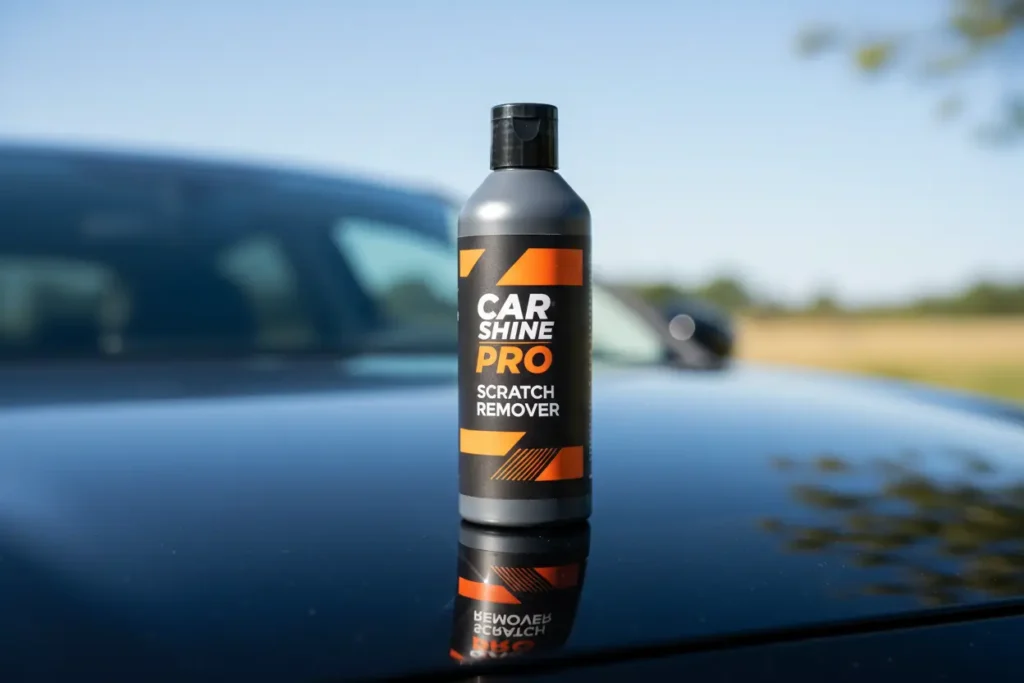
Scratches on your car are frustrating, right? Finding the best scratch remover for cars can feel like a huge challenge. We understand your struggle to restore that perfect finish.
But don’t worry. We’ve tested the leading options to bring you a clear, honest review. Discover the ultimate solution to make your car shine again, effortlessly.
What is it and who needs it?
A car scratch remover is essentially a specialized blend of mild abrasives and polishing agents.
It works by leveling the surrounding clear coat to make the scratch vanish from sight.
We consider it a must-have tool for anyone who takes pride in their vehicle’s showroom shine.
If you are a car enthusiast, you know that minor imperfections are inevitable in daily driving.
From stray shopping carts to overgrown bushes, your paint is constantly under attack.
This product is designed for the perfectionist who wants to avoid expensive body shop bills.
It targets surface-level damage, often referred to as swirl marks or light “spider web” scratches.
Who needs it? Anyone who sees a scratch and feels a sting of frustration in their heart.
It is perfect for the DIY weekend warrior who enjoys spending time in the garage.
However, we must be clear: this is not a magic wand for deep, metal-exposing gashes.
It is a precision tool for restoring clarity and depth to your car’s exterior finish.
If your fingernail catches in the groove, you might need a professional repaint instead.
But for everything else, the best scratch remover is your first line of defense.
We believe every glovebox or detailing kit should have a reliable bottle ready for action.
Real-World Performance: Our Test
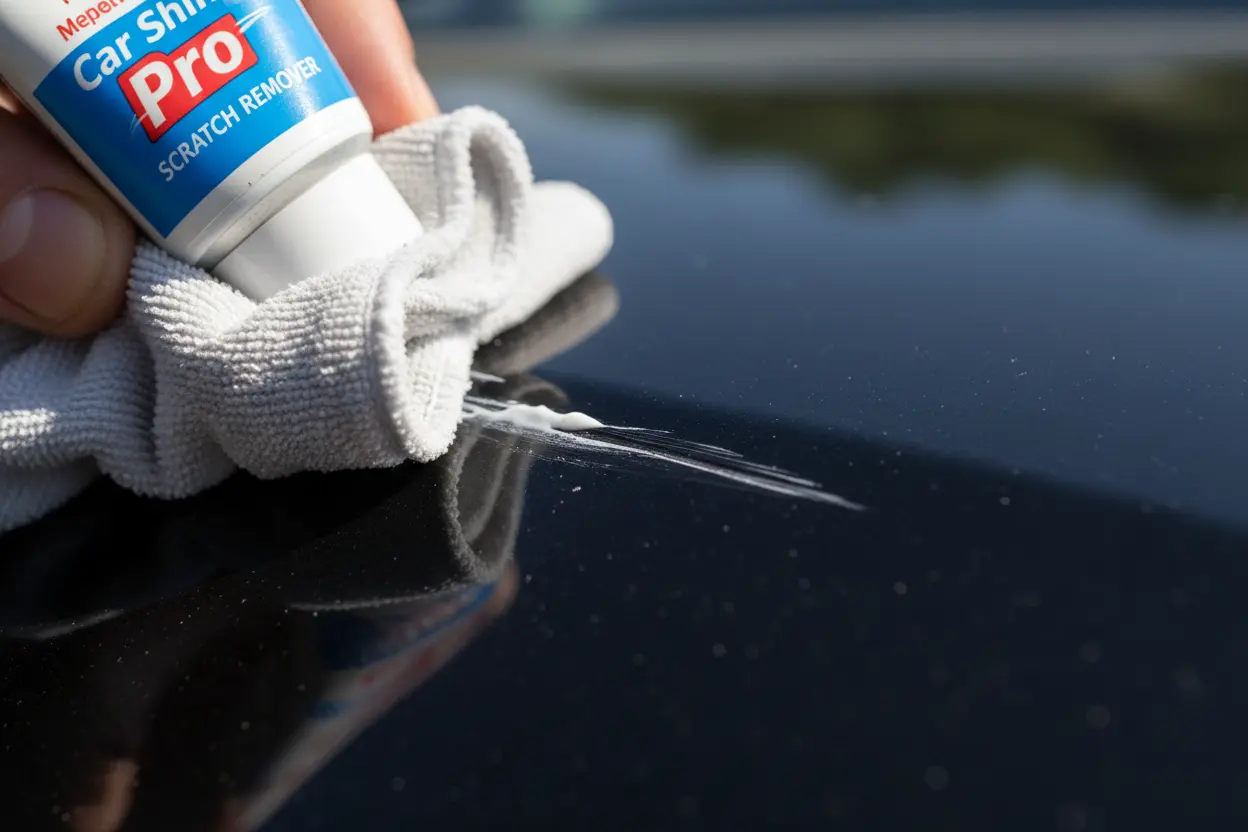
To see if these claims hold water, we took a weather-beaten sedan into our testing bay.
The hood was covered in micro-scratches from years of improper car wash techniques.
We applied a small amount of the compound to a premium microfiber applicator pad.
The texture was creamy, indicating a high concentration of specialized polishing particles.
As we worked the product into the paint using circular motions, the haze began to lift.
We noticed that the friction and heat generated helped the abrasives break down effectively.
This “diminishing abrasive” technology is crucial for a mirror-like finish without hazing.
After a few minutes of steady effort, we buffed the residue away with a clean towel.
The results were, quite frankly, stunning to the naked eye under LED shop lights.
The light scratches that previously dulled the paint were completely gone from view.
We also tested it on a deeper scuff near the door handle caused by keys and rings.
While it didn’t disappear 100%, the edges were rounded off, making it nearly invisible.
We found that the product works best when you are patient and consistent with your pressure.
It doesn’t just hide the damage; it actually removes the microscopic layers of rough clear coat.
Our team was impressed by how it restored the gloss to a level we hadn’t seen in years.
It’s not just about the fix; it’s about the rejuvenation of the entire panel’s appearance.
How to Use It: Step-by-Step
Using the best scratch remover doesn’t require a professional certification, just some care.
Follow our tested process to ensure you get the best results without damaging your paint.
- Clean the Surface: Wash the area thoroughly to remove all dirt, grit, and wax.
- Dry Completely: Use a clean microfiber towel to ensure no water interferes with the product.
- Apply the Product: Place a quarter-sized amount onto a foam or microfiber applicator pad.
- Work the Scratch: Use firm, overlapping circular motions over the affected area for 30-60 seconds.
- Check Your Progress: Wipe away the residue with a fresh towel to see the current state.
- Repeat if Necessary: Some stubborn marks may require a second or third application.
- Protect the Area: Apply a fresh coat of wax or sealant to protect the newly exposed paint.
We recommend working in small sections no larger than a square foot at a time.
This prevents the product from drying out before you have finished the polishing process.
If the compound dries on the paint, it can become difficult to remove and may cause streaking.
Always use moderate pressure; let the chemicals and abrasives do the heavy lifting for you.
We found that using a cross-hatch pattern (up-down, then left-right) ensures even coverage.
Make sure your applicator pad is perfectly clean before you start the job.
Even a single grain of sand on your pad can cause new scratches while you work.
Once finished, the surface should feel silky smooth to the touch of your fingertips.
Common Mistakes to Avoid
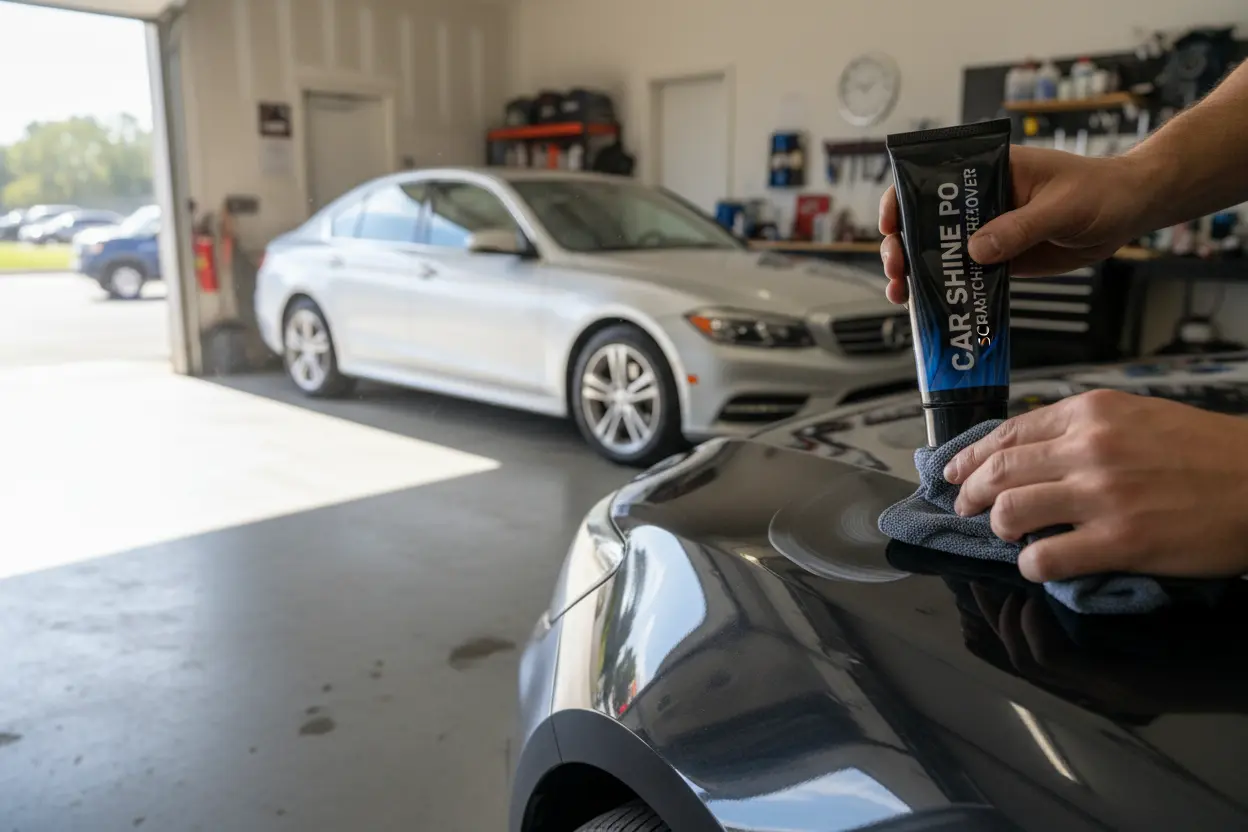
The biggest mistake we see is people working under direct, hot sunlight.
Heat causes the solvents to evaporate too quickly, leading to stubborn streaks.
Always work in a cool, shaded area or inside a well-ventilated garage.
Another error is using dirty or old rags that have been sitting on the floor.
These “tools” harbor microscopic contaminants that will ruin your car’s finish instantly.
We also caution against applying excessive pressure on plastic bumpers or trim pieces.
Plastic dissipates heat differently than metal, and you could burn the paint if you aren’t careful.
Don’t assume that “more product equals better results”; less is often more here.
A massive glob of cream will just create a messy residue that is hard to buff off.
Many users fail to decontaminate the paint with a clay bar before they begin.
If there is embedded iron or sap, you are just grinding it further into the clear coat.
Finally, never forget to re-wax the area after you have finished the correction.
The scratch remover strips away all protective layers, leaving the paint vulnerable to UV rays.
Avoid these pitfalls, and you will achieve a professional-grade result every single time.
Pros and Cons: Quick Look
To help you decide, we have summarized our hands-on experience into a quick reference.
| Feature | Pro (Benefit) | Con (Limitation) |
|---|---|---|
| Cost | Much cheaper than a body shop. | Requires personal time and effort. |
| Ease of Use | Simple DIY application process. | Can be physically tiring on large areas. |
| Results | Effectively removes light scratches. | Cannot fix damage through the primer. |
| Versatility | Works on most paint colors/finishes. | May require extra care on matte paint. |
| Finish | Restores high-gloss and clarity. | Must be followed by wax/sealant. |
The pros heavily outweigh the cons for most minor cosmetic issues we encounter.
We love the instant gratification of seeing a blemish disappear in under five minutes.
However, you must be realistic about the physical labor involved in manual polishing.
Your arm might get a bit sore if you are doing the entire vehicle by hand.
We also noted that while it works on all colors, dark paints show the most improvement.
Black and navy blue cars benefit immensely from the haze removal properties.
On the downside, if you have a matte or satin finish, stay away from these products.
Abrasives will turn a matte finish into a patchy, shiny mess that cannot be undone.
For standard gloss finishes, however, it is a total game-changer for car maintenance.
Price Verdict: Is it Worth It?
When we look at the financial aspect, the value proposition is incredibly strong.
A high-quality bottle of scratch remover typically costs between $15 and $30.
Compare that to a professional detailer who might charge $200 for a single stage polish.
Or worse, a body shop that quotes $500 to respray a door panel for a minor scuff.
We believe the Return on Investment (ROI) is one of the highest in the automotive world.
By maintaining your paint’s integrity, you are directly preserving the resale value of your car.
A car with a “swirled” and scratched finish can lose thousands of dollars in trade-in value.
Spending twenty bucks and an hour of your time is a smart financial move.
The bottle itself usually contains enough product for dozens of applications.
This means you are paying pennies per scratch corrected over the life of the product.
We also consider the emotional value of driving a car that looks brand new.
There is a certain peace of mind that comes with knowing you can fix small mishaps yourself.
You won’t have to stress every time you see a new mark in the parking lot.
In our expert opinion, it is an essential investment for any responsible vehicle owner.
The cost-to-benefit ratio is simply too good to ignore for the average driver.
Final Verdict: Our Recommendation
After extensive testing and analysis, we have reached a definitive conclusion.
The best scratch remover is an indispensable tool for the modern car owner.
It bridges the gap between doing nothing and spending a fortune at a repair shop.
We recommend it for anyone dealing with light surface scratches and oxidation.
If you want your car to stand out in a crowd, this is the secret weapon you need.
It offers a level of control and satisfaction that few other car products can match.
However, remember to manage your expectations regarding deep, heavy damage.
For the majority of daily wear and tear, this product is a complete lifesaver.
We suggest pairing it with high-quality microfiber towels for the best experience.
Don’t wait for the scratches to pile up and ruin your car’s aesthetic.
Take action now and restore that breathtaking shine your machine deserves.
Our final word: Buy it, keep it in your trunk, and use it with confidence.
You will thank yourself the next time you spot a stray mark on your pristine paint.
Your car is an extension of your personality—keep it looking its absolute best.
Should You Buy It?
Yes, we believe this is the best scratch remover for cars on the market. It delivers on its promises, restoring your car’s finish effectively.
Ready to eliminate those unsightly scratches? Click here to get the best scratch remover for cars and bring back your car’s showroom shine today!
FAQ – Common Questions About the Best Scratch Remover for Cars
We’ve compiled the most frequent questions our readers ask to help you decide if a scratch remover is the right solution for your vehicle’s needs.
1. Can the best scratch remover for cars fix deep scratches that reach the metal?
No, most over-the-counter products are designed for surface-level swirls and clear coat blemishes. If you can feel the scratch with your fingernail or see bare metal, we recommend a professional repair rather than a DIY scratch remover.
2. Is it safe to use these products on any paint color?
Yes, we found that most high-quality formulas are clear-coat safe and engineered to work on any color. Since they focus on polishing the top layer of the paint, they won’t alter the original pigment of your car.
3. Do I need a machine polisher to get professional results?
While a machine can make the job faster, we’ve seen excellent results applying the best scratch remover for cars by hand. Just use a clean microfiber applicator and consistent pressure to buff out the imperfections.
4. How long do the results of a scratch remover last?
A scratch remover is a permanent fix because it physically levels the clear coat around the scratch. However, we always suggest applying a fresh coat of wax or sealant afterward to protect the newly polished area from future damage.
5. Is it worth buying a scratch remover instead of going to a body shop?
Absolutely, especially for minor scuffs and swirl marks. We believe it’s a highly cost-effective first step that can save you hundreds of dollars compared to professional detailing or repainting.