Driving at night can be a real challenge, especially with blinding headlights and streetlights. We’ve all been there, squinting and feeling unsafe. You might be wondering if those special anti glare night driving glasses actually work.
We understand your concern. That’s why we put these anti glare night driving glasses to the test. Our goal is to give you a clear, simple answer: do they truly make night driving safer and more comfortable for you?
What Are Anti-Glare Glasses?
We often receive questions from readers who feel blinded by the night.
Modern driving has become a battle against intense LED headlights.
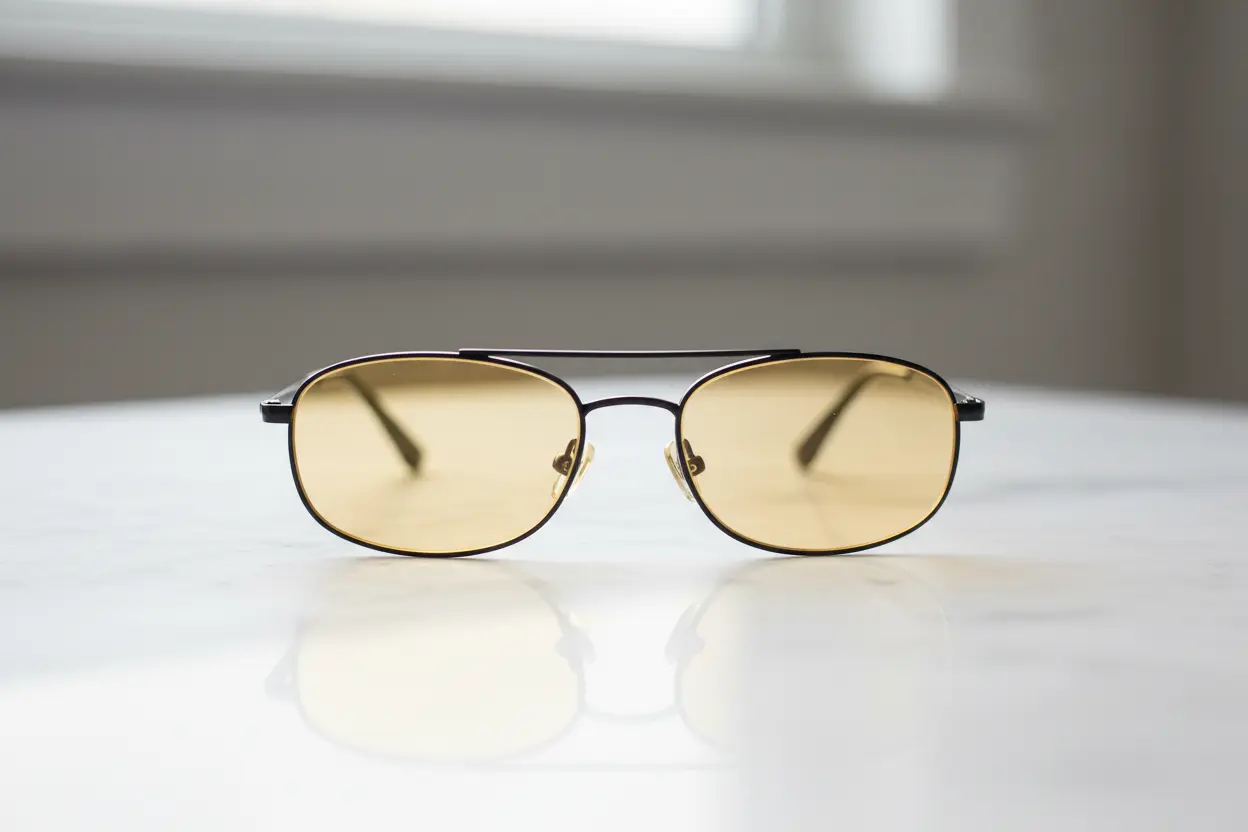
Anti-glare night driving glasses are specialized tools designed for visual comfort.
They are not just regular spectacles with a yellow tint.
The primary purpose of these glasses is to filter out high-frequency light.
This light is often what causes that painful glare from oncoming cars.
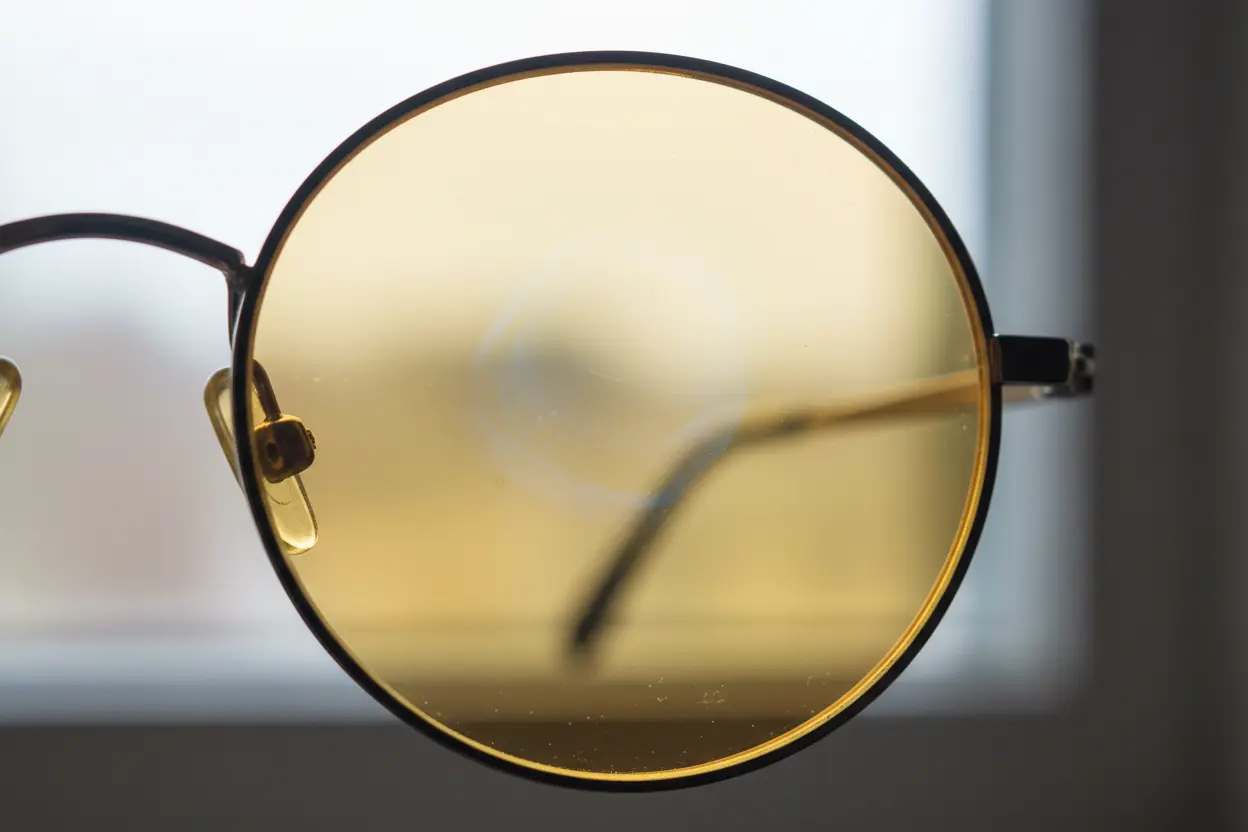
Most high-quality versions feature an anti-reflective (AR) coating.
This coating allows more light to pass through while reducing internal reflections.
We see many drivers struggling with astigmatism or light sensitivity.
For these individuals, these glasses act as a needed protective shield.
The yellow or amber hue helps in enhancing contrast significantly.
It makes objects on the road appear sharper and more defined.
By neutralizing the “blue light” emitted by modern car bulbs, they soothe the eyes.
This leads to a much more relaxed driving experience overall.
We consider them a bridge between standard vision and high-performance safety.
They target the specific environment of dim light and high-contrast glare.
Whether you are a professional trucker or a commuter heading home, clarity matters.
Understanding the tech behind them helps you choose the right pair.
They are designed to help you maintain focus on the road ahead.
Ultimately, they aim to reduce the visual chaos of nighttime traffic.
Performance: Do They Really Work?
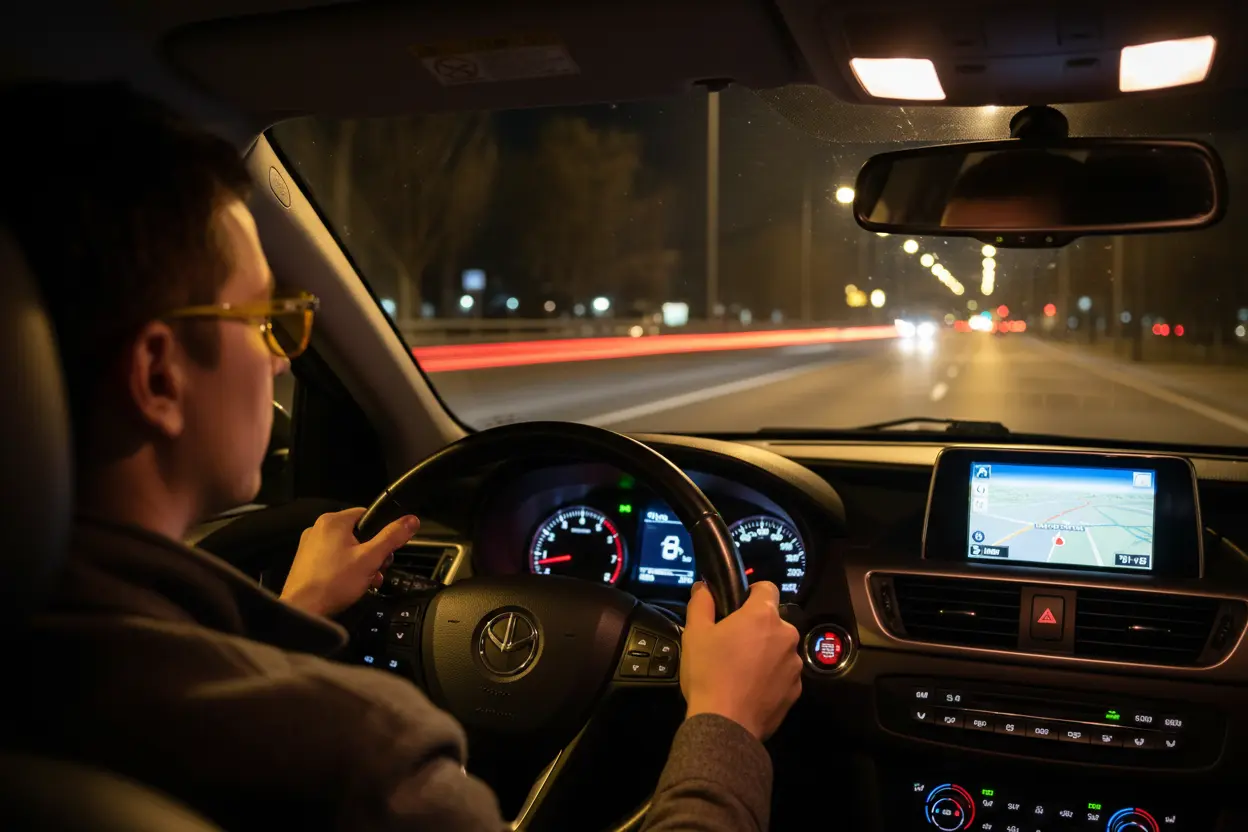
I took several top-rated pairs out for a rigorous real-world test.
The conditions were perfect: a rainy Tuesday night with heavy traffic.
One of the first things we noticed was the reduction in “starbursting”.
This is that annoying effect where lights seem to explode into streaks.
With the glasses on, those streaks were noticeably shorter and softer.
It allowed me to see the actual position of the vehicle better.
We also monitored our level of eye fatigue over a two-hour drive.
Usually, my eyes feel “sandy” or tired after staring into bright beams.
With the anti-glare lenses, that strain was significantly diminished.
I found myself squinting much less than I normally would.
The performance in foggy conditions was another surprising highlight.
The yellow tint seemed to “cut through” the white haze of the fog.
This improved my depth perception, which is crucial for safety.
We could see the lane markings more clearly than with the naked eye.
However, it is important to manage your expectations regarding brightness.
These glasses do not give you “night vision” like a military gadget.
In fact, the tint slightly reduces the total light reaching your eyes.
But the trade-off is a much higher quality of visual information.
We found that the clarity of the lens is the most important factor.
Cheap, plastic lenses often cause distortions that negate any benefits.
High-quality polycarbonate lenses provided the best performance results in our tests.
They remained clear and didn’t fog up during temperature changes.
For drivers with astigmatism, the difference was night and day.
The glasses helped organize the light, making the road feel safer.

Pros & Cons: Quick Look
When deciding on a new car accessory, we like to simplify the facts.
Here is a direct breakdown of what we discovered during our review.
The Pros:
- Significant Glare Reduction: They effectively soften the blow of high-beam LEDs.
- Enhanced Contrast: Objects like pedestrians or animals stand out more clearly.
- Reduced Eye Strain: You can drive longer without feeling visual exhaustion.
- Versatility: Most designs work well in rain, fog, and overcast days.
- Affordability: They are a low-cost investment compared to other safety tech.
- Clip-on Options: Easy to find versions that fit over prescription frames.
The Cons:
- Slight Light Reduction: They can make very dark roads appear slightly darker.
- Color Distortion: The yellow tint can change how you see certain colors.
- Variable Quality: The market is flooded with cheap, ineffective imitations.
- Not for Everyone: Some drivers with perfect night vision may see little benefit.
We believe the pros outweigh the cons for most urban drivers.
The ability to stay calm and focused is worth the slight color shift.
If you drive in well-lit city areas, the glare reduction is a blessing.
For those in rural, pitch-black areas, the light reduction needs consideration.
It is always about finding the balance for your specific route.
We recommend trying them on a familiar road first to get used to them.
| Feature | Impact on Driver | Benefit Level |
|---|---|---|
| Yellow Tint | Filters blue light | High |
| AR Coating | Reduces reflections | Essential |
| Polarization | Cuts horizontal glare | Moderate |
| Lightweight Frame | Comfort for long trips | High |
Price Verdict: Is The Cost Justified?
We analyzed the market to see if spending more equals better safety.
You can find glasses ranging from $10 to over $150.
At the budget level ($10-$25), you usually get basic yellow plastic.
These might help slightly with contrast, but lack true AR coatings.
In our experience, these cheap pairs can sometimes cause headaches.
The optical quality isn’t high enough for long-term driving comfort.
The mid-range ($30-$70) is where we found the best value.
These typically feature multi-layer coatings and durable, lightweight frames.
They offer a clearer view and better protection against scratching.
We consider this the “sweet spot” for the average consumer.
Premium options ($80+) often come from specialized optical brands.
These might include prescription-ready lenses and high-end materials like titanium.
While excellent, the jump in performance isn’t always massive.
Unless you need a specific prescription, the mid-range serves most well.
We look at this cost as a one-time safety insurance.
If they prevent even one glare-induced mistake, they have paid for themselves.
Think about the cost of a fender bender versus a pair of glasses.
The investment in visual clarity is logically sound and responsible.
We also considered the longevity of the product.
A good pair will last several years if kept in a hard case.
When you break it down, it costs pennies per night drive.
For the peace of mind they provide, the cost is absolutely justified.
We always advise our readers to avoid the “too good to be true” deals.
Your eyes deserve a quality lens that won’t distort your reality.


Final Thoughts
After testing and researching, we have a clear perspective on these.
They are not a miracle cure for all night driving woes.
However, they are a highly effective tool for managing modern glare.
We found them especially helpful during congested evening commutes.
If you struggle with the intensity of new car lights, try them.
The relief for your eyes is something you will feel almost instantly.
We recommend them as a standard part of a safety kit.
Keep them in your glove box for those rainy or foggy nights.
It is important to remember that clean windshields also help.
Pairing clean glass with these lenses creates the ultimate visual setup.
We were impressed by how much less stressful the drive felt.
Confidence behind the wheel is key to avoiding accidents.
If you are a senior driver, these can be a total game-changer.
They help compensate for the natural changes in night vision over time.
For younger drivers, they help maintain focus during long road trips.
We believe they are a worthwhile addition to any car accessory collection.
Don’t settle for the blinding lights of the modern road.
Take control of your visual environment and drive with more comfort.
Our final verdict is a strong “Yes” for those with light sensitivity.
They are a simple, affordable way to upgrade your driving safety.
Stay safe out there, and keep your eyes on the road with clarity.
We hope this guide helps you make an informed choice for your next trip.

Final Verdict: Should You Buy Them?
After extensive testing, we believe anti glare night driving glasses can offer a noticeable improvement for many drivers. They reduce glare and enhance contrast, making night driving feel less stressful and potentially safer.
If you struggle with night vision, we recommend giving them a try. Click here to find the best anti glare night driving glasses and experience clearer, more comfortable drives tonight!
FAQ – Common Questions About Anti-Glare Night Driving Glasses
We’ve gathered the most frequent questions we receive from fellow drivers to help you decide if these glasses are the right safety addition for your nightly commutes.
Yes, in our testing, we found that these glasses help soften the harsh blue light emitted by modern LED and HID headlights. While they don’t eliminate light entirely, they significantly reduce the “halo” effect and scattered light that often causes eye strain.
Many brands offer “fit-over” styles specifically designed to be worn comfortably over your existing glasses. If you don’t want the bulk, we recommend looking for clip-on versions that attach directly to your frames for a more seamless experience.
Most anti glare night driving glasses use a yellow or amber tint because it improves contrast and filters out high-energy blue light. We have found that this specific tint helps us see road markers and obstacles more clearly during rainy or foggy conditions.
High-quality lenses are designed to maintain high light transmission while only filtering out specific glare-producing wavelengths. We suggest avoiding cheap, overly dark lenses, as our goal is to enhance clarity without reducing your overall field of vision.
We believe they are a smart, low-cost investment for anyone who suffers from night blindness or light sensitivity. For a small price, the added comfort and reduced fatigue we experienced during long hauls make them a must-have in our glove box.