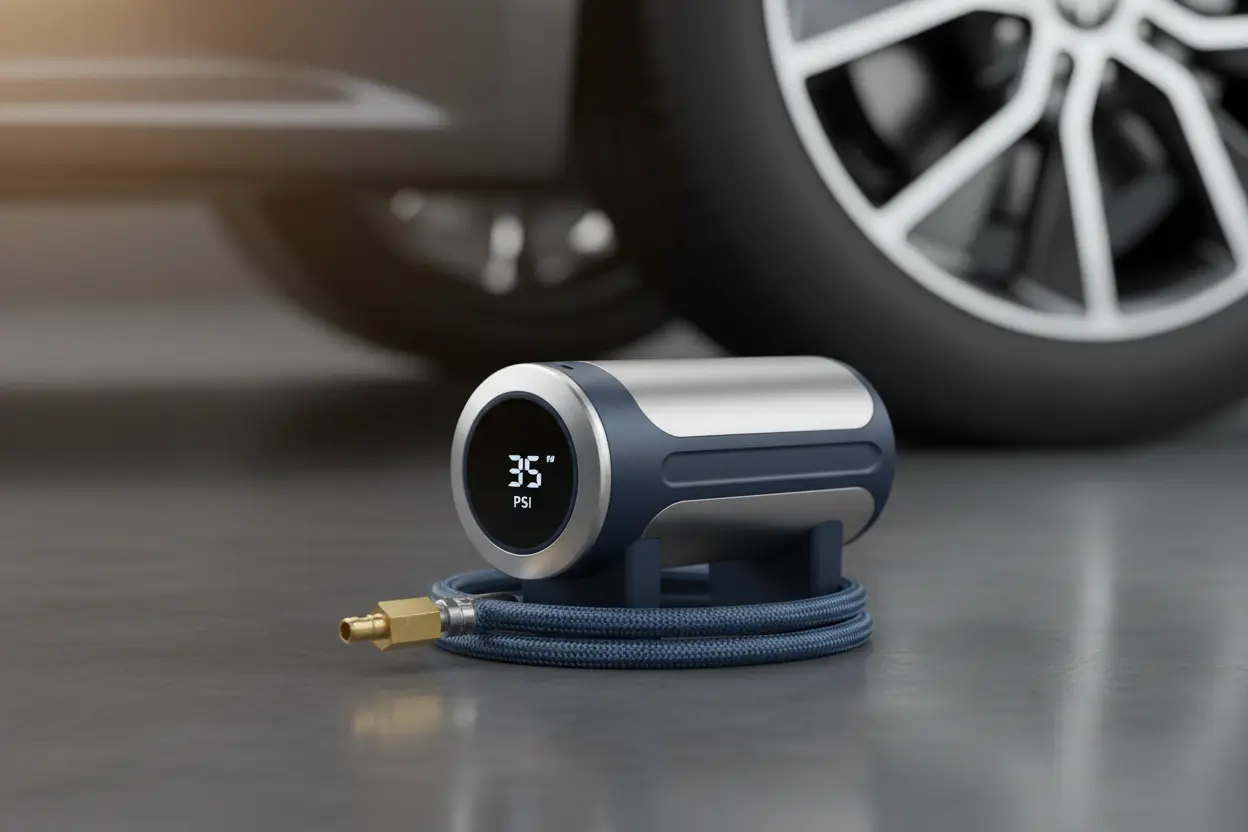
Do you ever wonder if your tires are truly ready for the road ahead? We often overlook the critical role tire pressure plays in our vehicle’s safety, fuel efficiency, and overall longevity. An inaccurate reading can lead to serious issues, from uneven wear to dangerous blowouts.
That’s why we believe a digital tire pressure gauge high accuracy is an indispensable tool for every car owner. It’s not just about checking pressure; it’s about gaining peace of mind and ensuring your ride is always optimized for the journey.
Why High Accuracy Matters for Your Tires
I have spent years under the hoods and around the wheels of countless vehicles.
If there is one thing I have learned, it is that precision is not a luxury.
When we talk about a digital tire pressure gauge high accuracy is the most vital factor.
Low tire pressure creates a larger contact patch between the rubber and the road.
While that might sound like more grip, it actually generates excessive heat.
This heat weakens the tire structure and can lead to a catastrophic blowout.
We always tell our readers that safety starts where the rubber meets the road.
On the flip side, over-inflation is just as dangerous for your daily drive.
An over-inflated tire becomes stiff and loses its ability to absorb road shocks.
This leads to a harsh ride and puts unnecessary stress on your suspension components.
It also rounds out the tire, causing the center tread to wear down prematurely.
Beyond safety, we have to look at the impact on your wallet and fuel.
Under-inflated tires increase rolling resistance, making your engine work harder.
This simple mechanical drag can significantly drop your fuel economy over time.
By using a high-accuracy gauge, you ensure your engine operates at peak efficiency.
Accuracy also plays a massive role in the longevity of your expensive tires.
Even a few PSI off from the manufacturer’s recommendation can shorten tire life.
We have seen tires that should last 50,000 miles fail at 30,000 due to neglect.
A precise digital reading helps you maintain that perfect balance every single month.
Finally, modern vehicles rely on sensitive Electronic Stability Control systems.
These systems perform best when all four tires have identical, accurate pressures.
A digital gauge removes the “guessing game” associated with old mechanical sticks.
It provides a clear, numerical truth that keeps your car handling exactly as intended.
Key Features of a Top Digital Tire Pressure Gauge
When I am shopping for new gear, I look for features that simplify my life.
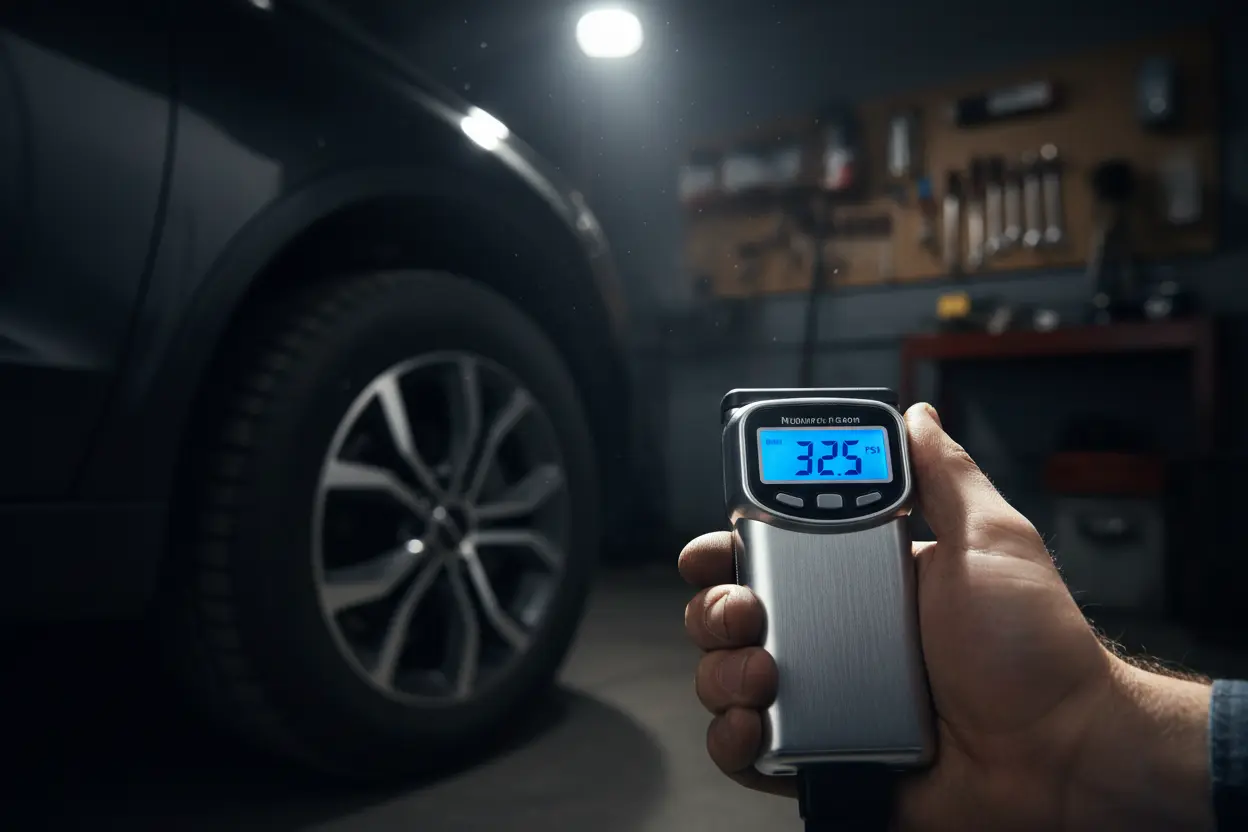
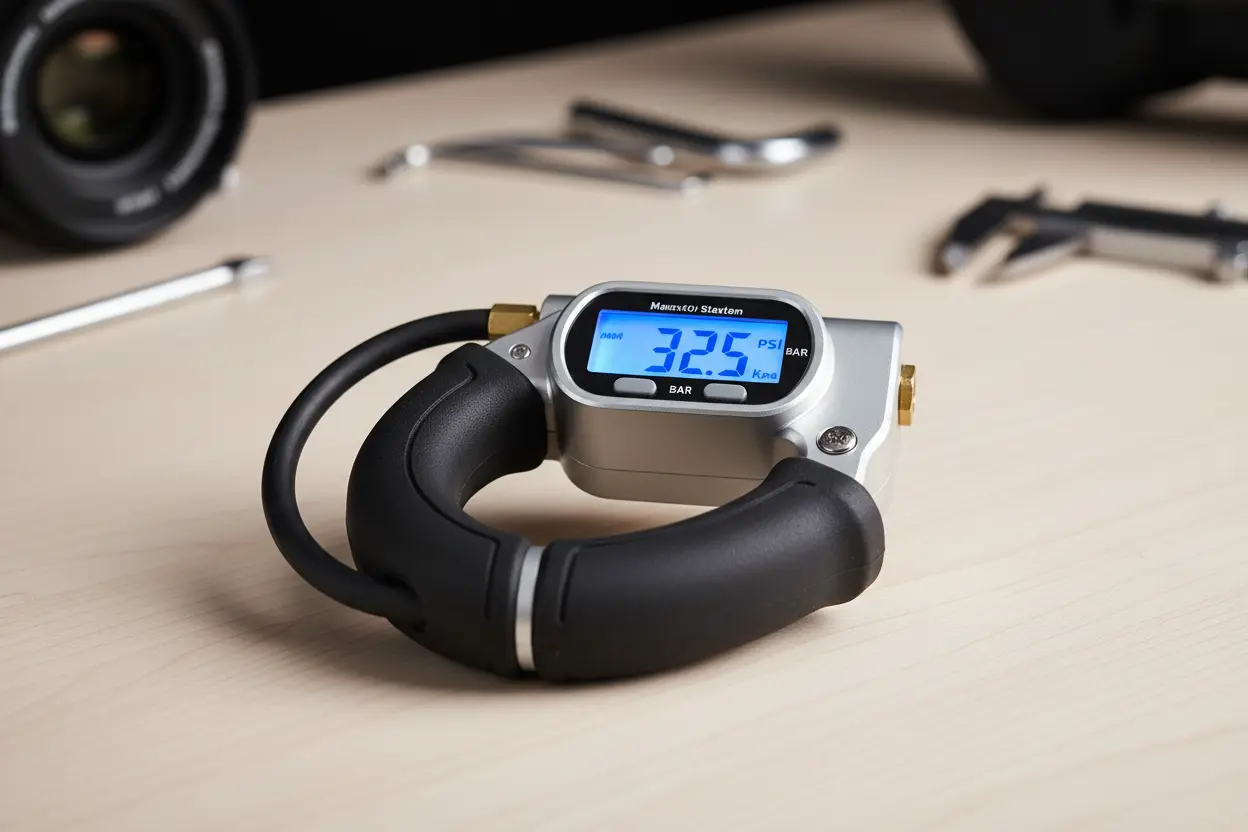
A backlit LCD display is the first thing I check for on any digital gauge.
Checking tires in a dark garage or at night is a common reality for drivers.
A bright screen ensures you aren’t squinting or using a flashlight to see.
Ergonomic design is another feature that we believe is often overlooked by many.
You want a tool that fits naturally in your hand and provides a solid grip.
Many top-tier models feature rubberized housings to prevent slips and drops.
This also protects the sensitive internal sensors from impact damage during use.
We also prioritize gauges that offer multiple measurement units for versatility.
The ability to switch between PSI, BAR, and KPA is incredibly helpful.
Whether you are working on a domestic truck or a European sports car, you’re covered.
It eliminates the need for manual conversions, which often lead to human error.
A built-in bleed valve is a feature I personally cannot live without anymore.
Sometimes you overfill your tires at the gas station air pump by mistake.
Instead of removing the gauge to let air out, you just press the valve.
This allows for micro-adjustments to hit the exact pressure number required.
We also look at the nozzle design and whether it includes a light.
An LED-lighted nozzle helps you locate the valve stem in pitch-black conditions.
It creates a seamless seal, preventing air leakage while you take your reading.
This ensures the high accuracy of the measurement remains completely untainted.
Lastly, consider the battery life and the auto-shutoff functionality of the device.
There is nothing worse than reaching for a tool and finding it dead.
Quality gauges use efficient circuitry to ensure the batteries last for years.
These small details transform a basic tool into a reliable roadside companion.
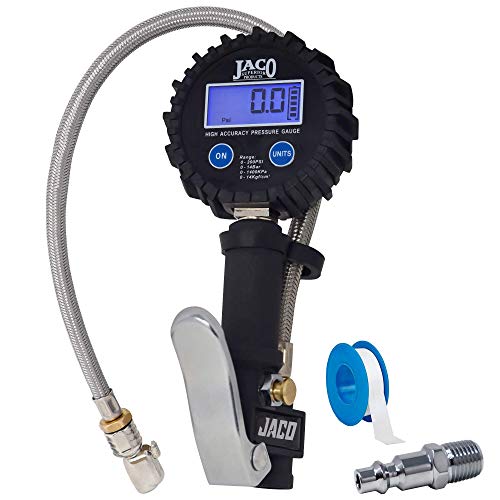
- ANSI 1A ACCURACY: Performance tested & calibrated accurate to ±1% full scale with 0.5 PSI resolution for precise tire in…
- BUILT TO LAST: Solid steel body with rugged powder-coated finish, 18″ steel-braided air hose, precise “push-to-inflate” …
- LIGHTNING AIR CHUCK: Includes our all-new, patented lock-on tire chuck with self-locking nozzle & rapid quick-release va…
Mastering Your Digital Tire Pressure Gauge
Using a digital gauge is simple, but doing it correctly requires a specific process.
We always recommend checking your tire pressure when the tires are cold.
“Cold” means the car has been parked for at least three hours or more.
Driving heats up the air inside, which temporarily increases the pressure reading.
Start by unscrewing the valve cap from the tire you wish to check.
Keep the cap in a safe place, like your pocket, so it doesn’t get lost.
Check the valve stem for any dirt or debris that might block the seal.
A clean connection is the only way to get a truly accurate reading.
Now, turn on your digital gauge and select your preferred unit, usually PSI.
Press the nozzle of the gauge firmly and straight onto the tire valve stem.
You might hear a brief hissing sound as the connection is first made.
Hold it steady until the numbers on the digital screen stop flashing.
Once the reading is locked, remove the gauge and look at the result.
I always compare this number to the tire placard on the driver’s door.
Never use the “Max Pressure” listed on the tire sidewall as your guide.
That number is a safety limit, not the recommended pressure for your vehicle.
If the pressure is too low, add air in small increments and re-check.
If it is too high, use the bleed valve on your gauge to release air.
We suggest repeating this process for all four tires and the spare tire.
Often, the spare is ignored until an emergency happens, which is a mistake.
After you have finished, remember to screw the valve caps back on tightly.
These caps act as a secondary seal and keep dirt out of the valve.
Wipe down your gauge with a dry cloth before putting it back in storage.
Consistency is key, so try to perform this check at least once a month.
Top Picks: Digital Tire Pressure Gauge High Accuracy
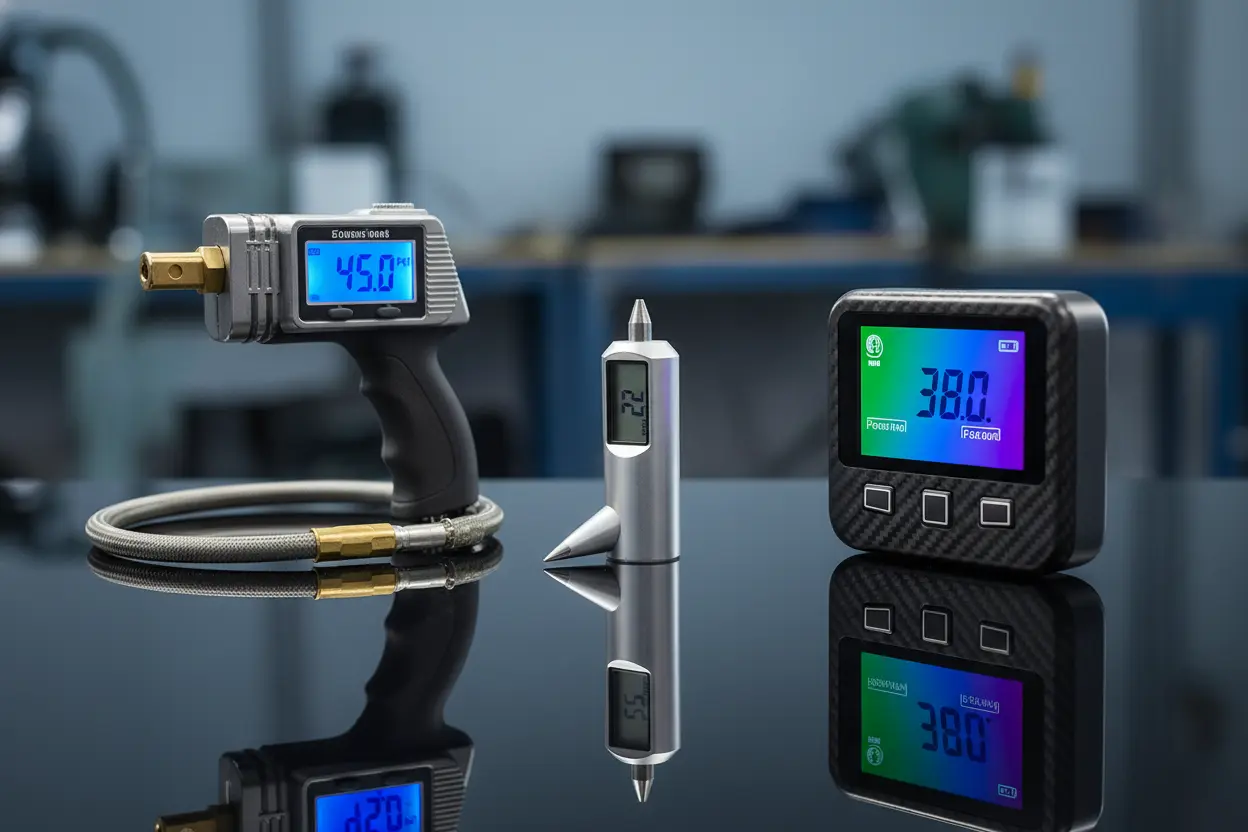
Selecting the right tool depends on your specific needs and your budget.
I have tested dozens of models, and a few consistently rise to the top.
The AstroAI Digital Tire Pressure Gauge is a fantastic all-around choice.
It is affordable, highly accurate, and features a very helpful lighted nozzle.
For those who want a more professional feel, the Milton S-506 is legendary.
Milton has been a staple in American garages for decades for a reason.
Their digital version combines old-school durability with modern sensor precision.
It feels substantial in the hand and is built to survive a lifetime of use.
If you are looking for a heavy-duty option, consider the Jacaco ElitePro.
This model features a flexible hose, which makes reaching awkward valves much easier.
It also includes a large, easy-to-read dial that functions digitally for maximum accuracy.
We find this style best for truck owners and those with deep-dish wheels.
| Model | Best For | Key Strength | Accuracy Range |
|---|---|---|---|
| AstroAI | Everyday Drivers | Value & Ease of Use | +/- 1% |
| Milton S-506 | Professionals | Industrial Durability | +/- 0.5% |
| Jacaco ElitePro | Trucks & SUVs | Flexible Hose Design | +/- 1% |
| Tekton 5941 | Budget Conscious | Compact Portability | +/- 1.5% |
The Tekton 5941 is our pick for those who want something small and simple.
It fits perfectly in a center console or even a jacket pocket for bikers.
While it lacks some “pro” features, its accuracy remains impressive for the price.
It is an excellent “first gauge” for new drivers or as a secondary backup.
We always suggest looking for models that come with a manufacturer warranty.
A warranty is a sign that the company stands behind their calibration accuracy.
High-quality sensors can be sensitive, and having that protection offers peace of mind.
Choose the one that fits your grip and your vehicle’s specific requirements.
No matter which model you choose, the goal remains the same: safety.
A digital tire pressure gauge high accuracy rating is your best defense.
By investing in one of these top picks, you are investing in your car’s health.
We have seen these tools pay for themselves in fuel savings within a year.
Extend Your Gauge’s Life: Care and Maintenance Tips
A precision instrument like a digital gauge requires a bit of regular maintenance.
I always tell my friends that a tool only takes care of you if you care for it.
The most important rule is to store the gauge in a stable environment.
Avoid leaving it on the dashboard where it is exposed to direct, intense sunlight.
Extreme heat can cause the liquid crystal display (LCD) to fail over time.
It can also affect the calibration of the internal pressure transducer.
We recommend keeping it in the glovebox or a dedicated tool bag in the trunk.
A padded case is even better, as it prevents the sensor from getting jarred.
Battery maintenance is the next critical step for long-term reliability.
Most digital gauges use small button cells or AAA batteries to function.
If you don’t plan on using the gauge for several months, remove the batteries.
This prevents acid leakage, which can permanently destroy the internal circuit board.
We also suggest checking the battery terminals for any signs of corrosion.
If you see white powder, clean it off gently with a cotton swab and vinegar.
Always use high-quality brand-name batteries to ensure a steady voltage.
A weak battery can actually cause the gauge to give inconsistent or false readings.
Keep the nozzle clean and free from grease, oil, or road salt.
After a few uses, wipe the interface area with a clean, slightly damp cloth.
Do not submerge the gauge in water or use harsh chemical cleaners on the screen.
If the seal inside the nozzle looks cracked, it may be time to replace the unit.
Finally, we recommend a calibration check at least once every year.
You can do this by comparing your digital reading to a known accurate gauge.
If your gauge is consistently off by more than 1-2 PSI, it may be damaged.
Treating your gauge with respect ensures it remains a trusted tool for years.
PSI, BAR, KPA: Understanding Tire Pressure Units
Navigating the different units of measurement can be confusing for many drivers.
In the United States, PSI (Pounds per Square Inch) is the standard unit.
Most passenger cars require a pressure somewhere between 30 and 35 PSI.
It is the unit you will see most often on gas station pumps and placards.
However, if you own a European car, you might see the unit BAR.
One BAR is approximately equal to the atmospheric pressure at sea level.
To be precise, 1 BAR equals 14.50 PSI, which is a significant difference.
Mistaking these two can lead to dangerous under-inflation if you aren’t careful.
KPA (Kilopascal) is the metric unit commonly used in Canada and overseas.
It uses much larger numbers, which can be startling if you are used to PSI.
For example, 240 KPA is roughly equal to 35 PSI, a standard tire pressure.
Most high-accuracy digital gauges allow you to toggle between these three units easily.
- PSI: Used primarily in the USA and for most consumer vehicles.
- BAR: Common in Europe; 1 BAR = 14.5 PSI.
- KPA: The global metric standard; 100 KPA = 14.5 PSI.
- Kgf/cm²: Occasionally seen on older machinery; roughly equal to 1 BAR.
We always advise our readers to stick to the unit listed in their owner’s manual.
This prevents any “math errors” when you are standing at the air compressor.
If your manual uses BAR but your gauge only shows PSI, keep a conversion chart handy.
A digital gauge with a mode button makes this transition completely seamless.
Understanding these units helps you communicate better with mechanics as well.
If you are traveling abroad and need to rent a car, this knowledge is vital.
It ensures that no matter where you are, your tires are safely inflated.
Knowledge, combined with a high-accuracy tool, is the key to automotive mastery.

- PRO ACCURACY – mechanic recommended, performance tested, & calibrated accurate to professional ANSI 2A standards – with …
- STRONG & RUGGED – feels solid in the hand & built to last from 100% solid brass & steel parts shielded by our shock-resi…
- ADVANCED ENGINEERING – all readings lock-on to the display until the “ON” button is pressed once to reset to zero. Featu…
Drive Smart, Drive Safe!
Investing in a digital tire pressure gauge high accuracy is more than just buying a tool; it’s an investment in your safety and the longevity of your vehicle. We’ve explored why precision matters and how the right gauge can transform your car maintenance routine, giving you confidence on every journey.
What’s your go-to tire pressure tip? Share your thoughts and favorite gauges in the comments below, and let’s keep our wheels rolling safely together!
FAQ – Common Questions About Digital Tire Pressure Gauges
We’ve compiled the most frequent questions we receive to help you master your tool and keep your vehicle performing at its best.
We recommend checking your tires at least once a month and before any long road trip. Regularly using a digital tire pressure gauge with high accuracy helps you maintain optimal fuel economy and prevents uneven tire wear.
For the most precise results, you should always check the pressure when tires are “cold,” meaning the car has been parked for at least three hours. This ensures your digital tire pressure gauge provides a reading that isn’t inflated by the heat generated during driving.
Digital gauges are far easier to read in low light thanks to backlit screens and they eliminate the guesswork of reading small lines. Most importantly, a quality digital tire pressure gauge offers high accuracy and consistency that mechanical spring-based gauges often lack.
Most modern devices allow you to toggle through units by pressing the power button. Since we primarily use PSI in the US, simply click through the settings until your digital tire pressure gauge matches the unit listed on your vehicle’s door jamb sticker.
To keep your tool reliable, we suggest storing it in a dry, room-temperature environment and replacing the batteries as soon as the low-battery indicator appears. Keeping the nozzle free of dirt and debris ensures a perfect seal, which is critical for an accurate reading.